Tesla Posts 49 Percent Sales Drop in Europe Amid US Market Pressures
Tesla’s European registrations plunge 49 percent year-over-year in October, reflecting intensified competition from lower-priced rivals and a maturing EV landscape. The decline extends to the United States, where third-quarter pull-forward sales exhausted incentives, leaving Q4 inventories at 72 days’ supply for ‘Model 3’ and ‘Model Y’. This slowdown challenges Tesla’s 20-30 percent growth projection for 2025, as global deliveries fall short of 1.8 million units.
‘Model Y’, once the world’s top-selling vehicle, cedes ground to BYD’s ‘Seagull’ and SAIC’s MG models, which capture 2.1 percent combined market share in Europe through localized production. Tesla’s narrow lineup—four models total—lacks the hybrid options driving 28 percent gains for Toyota’s ‘RAV4 Prime’. U.S. tariffs on Chinese imports, now at 100 percent, shield Tesla’s Fremont assembly but inflate component costs by $800 per vehicle.
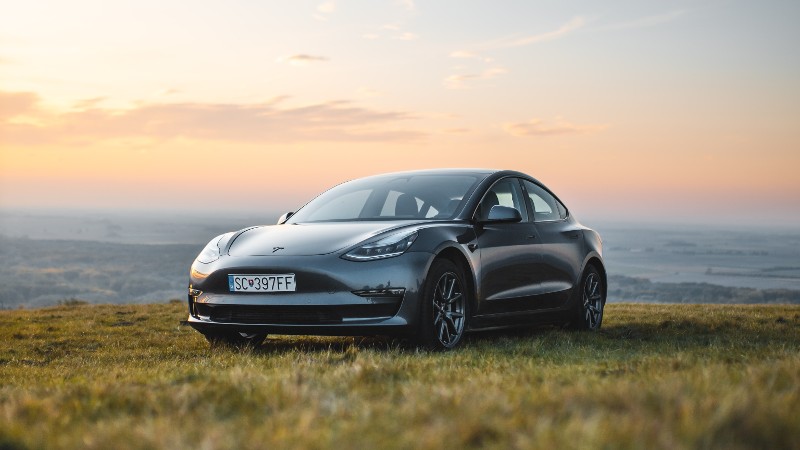
Battery utilization at Gigafactory Texas hovers at 65 percent, with 4680 cells enabling 320 miles of EPA range in base ‘Model 3’ trims. Over-the-air updates introduce adaptive cruise enhancements, reducing energy consumption by 4 percent on highways. Yet, average transaction prices dip to $44,200, down $1,500 from Q2, as $5,000 lease incentives fail to stem a 12 percent U.S. sales contraction in October.
Rivian and Lucid report parallel slumps, with Rivian’s ‘R1T’ deliveries down 18 percent to 12,640 units amid production shifts to 400-volt architectures. Ford’s ‘F-150 Lightning’ achieves 7,000 sales, buoyed by 50 percent domestic content qualifying for residual credits. Tesla reallocates $2 billion from autonomy to price cuts, targeting sub-$40,000 entry for a refreshed ‘Model 2’ in 2026.
Supply chain adjustments include $1.1 billion in U.S. lithium contracts, cutting Asian dependency by 22 percent. Vehicle-to-load capabilities in ‘Cybertruck’ support 11 kW export, integrating with 1.2 million home chargers nationwide. Elon Musk attributes the dip to “regulatory headwinds,” noting European subsidies favor local assemblers like Volkswagen’s ‘ID.4’.
Global order backlog stands at 450,000 units, prioritizing North American builds for 55 percent domestic sourcing. Aerodynamic refinements yield a 0.23 drag coefficient on ‘Model S Plaid’, optimizing 75 mph efficiency at 112 mpge. This contraction prompts Tesla’s pivot, with hybrids eyed for 15 percent of lineup by 2028, up from zero in 2025.
Partnerships with Panasonic secure 85 kWh packs, delivering 510 horsepower in dual-motor ‘Model Y’ variants. Regulatory compliance meets National Highway Traffic Safety Administration’s 2027 autonomy standards, featuring Level 3 highway assist up to 85 mph. Production at Shanghai rises 8 percent to 950,000 units annually, with 30 percent exported to U.S. ports via 45-day transits.