Tesla Recalls Over 2 Million Model 3 and Model Y Vehicles for Hood Latch Issue
A widespread safety concern has prompted Tesla to recall more than 2 million Model 3 and Model Y vehicles in the United States, marking one of the largest actions in the company’s history. The issue involves hood latches that may fail to warn drivers of an unlatched condition, potentially leading to the hood opening while driving and obstructing visibility. This defect heightens crash risks, affecting vehicles produced between 2017 and 2024.
The National Highway Traffic Safety Administration announced the recall on November 29, covering 1,589,646 Model 3 sedans and 1,135,364 Model Y crossovers. Owners will receive over-the-air software updates to address the problem, with notifications scheduled to begin December 30. Tesla identified the issue through warranty claims and field reports, confirming no prior crashes or injuries linked to the defect.
Secondary hood latches on these models provide a backup to the primary latch, but the recall targets a sensing unit that detects unlatched states and activates warnings. The software fix will enhance diagnostic checks and alert functionality without requiring physical inspections or part replacements. Tesla’s service centers stand ready for any manual interventions if over-the-air updates prove insufficient.
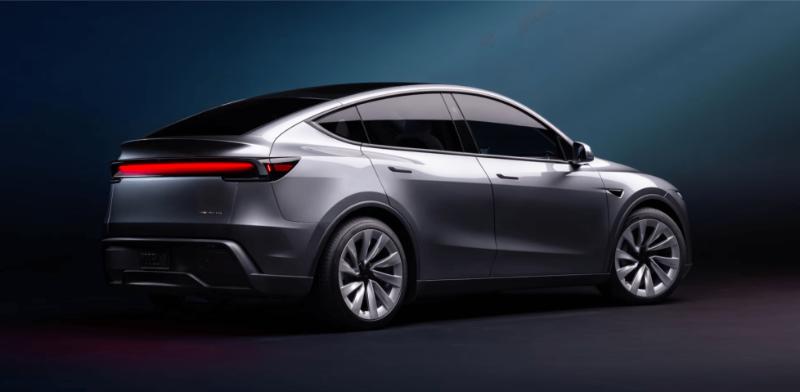
This recall follows a pattern of Tesla’s remote software resolutions, which have handled prior issues like suspension faults and brake caliper bolts. The Model 3, refreshed in late 2023 with a sleeker design and improved range up to 341 miles, and the Model Y, America’s top-selling EV with 385,900 units moved in 2024, represent core pillars of Tesla’s lineup. Production at Fremont, California, and Austin, Texas, facilities continues uninterrupted.
Broader industry scrutiny on autonomous features accompanies the announcement, as Tesla’s Full Self-Driving beta faces probes into low-visibility performance. Chief of Vehicle Safety at NHTSA, Jennifer Timian, emphasized the agency’s commitment to rapid defect resolutions amid rising EV adoption. Tesla shares dipped 1.2 percent in after-hours trading, closing at $248.50.
Kia counters with its own EV momentum, though the ‘EV4’ compact crossover skips the U.S. market for an unspecified alternative model. The ‘EV3’ small SUV, starting at $34,995 with a 303-mile range, launches domestically in early 2026 on the E-GMP platform shared with the ‘EV6’. Kia’s U.S. sales hit 775,502 units through October, up 9.4 percent year-over-year.
Ford reports similar vigilance, recalling 20,484 ‘F-150 Lightning’ trucks for rear axle bolts, while Rivian addresses ‘R1T’ and ‘R1S’ suspension concerns affecting 5,200 units. These actions underscore a sector-wide focus on reliability as battery-electric vehicles claim 8.1 percent market share in Q3. Cox Automotive projects 1.25 million EV sales for 2025, down from earlier 1.4 million forecasts post-tax credit expiration.
Tesla’s update rollout aims for 95 percent completion within 60 days, leveraging its connected fleet architecture. Vehicle owners can verify status via the Tesla app or NHTSA’s VIN lookup tool. The company’s Q3 deliveries reached 462,890 units, buoyed by Model Y demand despite global tariff pressures on imported components.
Regulatory filings detail the latch system’s reliance on ultrasonic sensors, now recalibrated for heightened sensitivity. Elon Musk tweeted support for swift fixes, noting over-the-air capabilities as a “game-changer for safety.” As winter driving conditions approach, this recall prioritizes hazard mitigation in an era of software-defined vehicles.