Volkswagen Recalls 13,769 ID.4 and Audi Q4 e-tron Vehicles for 12-Volt Battery Failure
A critical flaw in the onboard charging system threatens to disable thousands of electric SUVs across the U.S., exposing drivers to sudden power loss on highways. Volkswagen Group has issued a recall for models reliant on a shared platform, where moisture infiltration corrupts electrical components essential for basic vehicle operation. This defect, affecting both affordable crossovers and premium variants, arrives amid broader scrutiny of EV reliability in cold weather conditions.
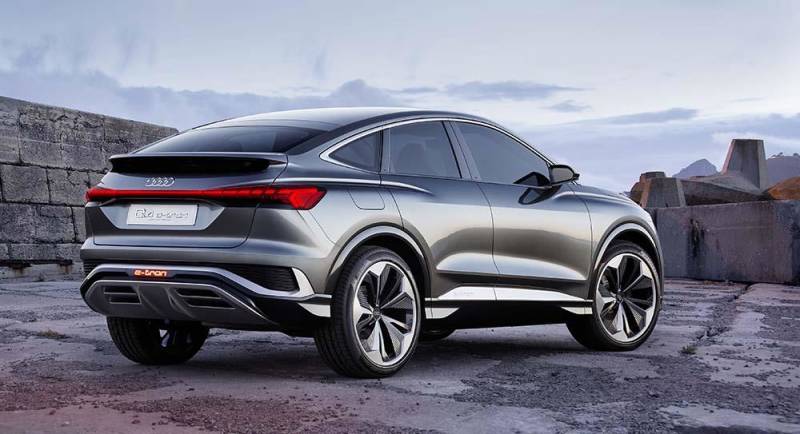
The recall encompasses 7,805 units of the 2024 ‘Volkswagen ID.4’, alongside 3,072 of the 2024 ‘Audi Q4 e-tron’ and 2,892 of the 2024-2025 ‘Audi Q4 e-tron Sportback’. These vehicles, built between February 2023 and December 2024 at facilities in Chattanooga, Tennessee, and Győr, Hungary, share the Modular Electric Drive Matrix architecture. The National Highway Traffic Safety Administration designated the action as campaign number 25V-125 on February 28, with Volkswagen’s internal code 93CJ and Audi’s 93FR.
Engineers identified the root cause in the Onboard Charger with integrated DC/DC-Converter, or OCDC, supplied by Bosch. Insufficient protective coating on the printed circuit board allows condensation to trigger electromigration, a process where metal ions migrate under electrical stress, forming conductive paths that short-circuit the unit. This failure halts recharging of the 12-volt auxiliary battery, which powers steering assistance, brakes, infotainment, and lights, despite ample capacity in the 77-kWh or 82-kWh high-voltage traction battery.
Field data revealed 244 warranty claims from September 2024 to January 2025, including 127 for ‘ID.4’ owners and 117 for Audi, encompassing non-start conditions, dashboard warnings, and roadside tows. No crashes or injuries have been reported, but the agency notes that depleted 12-volt power during operation reduces motive force, heightens crash risk, and limits emergency functions. Affected drivers receive escalating alerts—audible chimes, instrument cluster icons, and messages like “Electrical System Malfunction”—before total shutdown.
Dealerships will replace the defective OCDC with a revised unit featuring enhanced PCB sealing, introduced in production for Audi in June 2024 and Volkswagen in September 2024. The free repair, estimated at one hour labor, requires no high-voltage intervention and falls under the eight-year or 100,000-mile powertrain warranty. Owner notifications began mailing April 29, with service appointments prioritized through the myVW or myAudi portals using vehicle identification numbers.
This marks the third major recall for the ‘ID.4’ platform in 2025, following a February action on 177,000 ‘Atlas’ models for engine covers and an October probe into ‘Q4 e-tron’ suspension bolts. Volkswagen’s U.S. EV sales dipped 12 percent year-over-year in Q1, totaling 18,000 units, as competitors like Hyundai report 25 percent gains on the ‘Ioniq 5’. The ‘ID.4’, priced from $38,995 with 275 miles of EPA range, leads Volkswagen’s electrification push under the $7.3 billion Transform 2025+ plan.
Broader industry patterns emerge, with Hyundai’s Integrated Charging Control Unit recall impacting 208,000 vehicles for similar overvoltage issues. Ford recalled 20,000 ‘F-150 Lightning’ trucks in November for axle bolts, while Tesla addressed 2.1 million ‘Model 3’ and ‘Model Y’ units for hood latches. These actions coincide with a projected 15 percent drop in U.S. EV registrations post the $7,500 tax credit’s September 30 expiration, per Cox Automotive forecasts.
The OCDC’s dual role—converting high-voltage direct current to alternating for external charging and stepping down to 12 volts—amplifies its vulnerability in humid or freezing climates. Testing at Volkswagen’s Wolfsburg labs simulated 1,000 thermal cycles, confirming failure rates below five percent in revised units. Owners report intermittent symptoms worsening below 32 degrees Fahrenheit, prompting interim guidance to precondition batteries via app.
Volkswagen maintains that high-voltage systems remain isolated and safe, with no fire risks tied to this defect. The recall aligns with European Union mandates under Regulation (EU) 2019/2144, where 28,000 units face similar scrutiny. As U.S. EV infrastructure expands to 168,000 public chargers by year-end, such low-voltage gremlins underscore the need for robust auxiliary safeguards in software-defined architectures.