Bollinger Motors Shuts Down Operations After EV Truck Failures
Bollinger Motors, an electric truck startup once backed by federal incentives, has abruptly closed its doors, leaving debts unpaid and employees without wages. The Michigan-based company, which promised rugged off-road EVs for commercial use, succumbed to chronic funding shortages and unproven vehicle designs. This collapse marks another casualty in the U.S. electric vehicle sector, where ambitious launches falter against market demands for affordability and scalability.
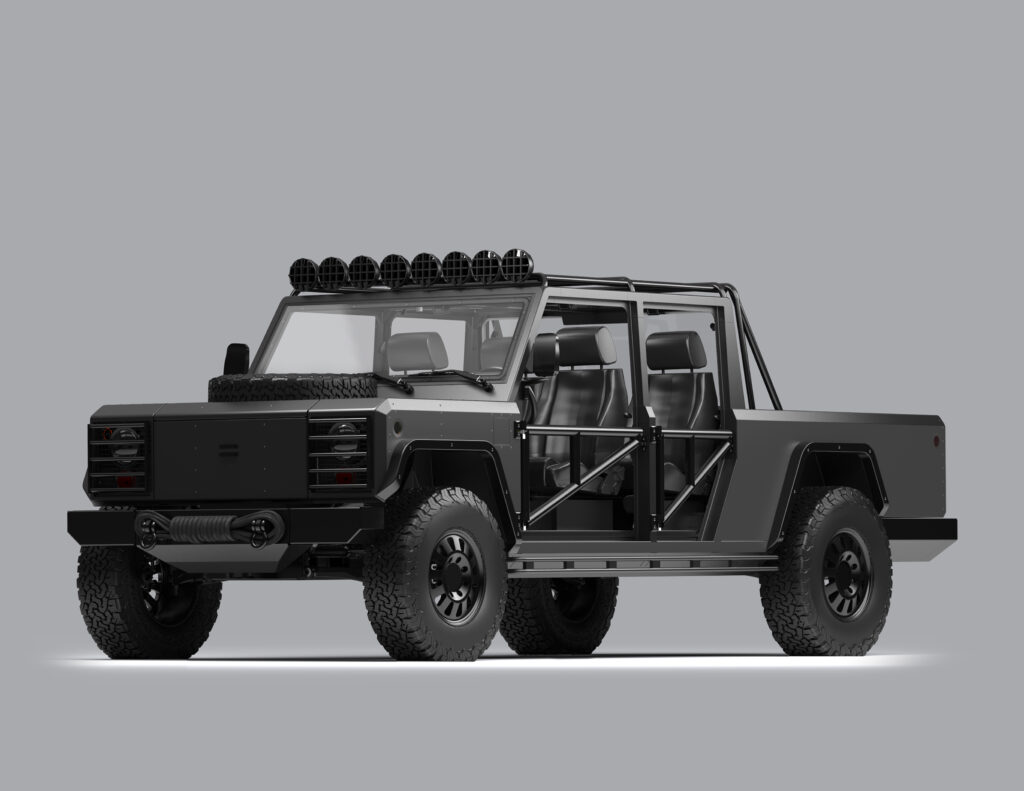
Operations halted on November 21, with human resources director Helen Watson notifying staff via email that the company lacked funds to continue payroll. Dozens of employees filed complaints with Michigan’s Department of Labor and Economic Opportunity over missed paychecks dating back weeks. The shutdown affects the firm’s facility in Oak Park, where prototypes of the ‘B1’ SUV and ‘B2’ Chassis Cab sat unfinished since their 2019 unveiling.
Bollinger targeted niche markets with high-end pricing above $120,000 per unit, emphasizing a body-on-frame construction and quad-motor setup delivering up to 520 horsepower and 6,000 pound-feet of torque. The vehicles promised 200 miles of range on a 155-kWh battery pack, but production delays persisted amid supply chain issues and certification hurdles. A 2022 acquisition of intellectual property by Mullen Automotive for $148 million aimed to repurpose designs for smaller delivery trucks, yet Mullen reported no sales traction from the deal.
State incentives compounded the fallout, as Michigan’s $3 million grant required Bollinger to invest $44 million and create 237 jobs by 2025—obligations unmet. Officials now pursue clawback procedures under the Michigan Economic Development Corporation guidelines, which mandate repayment for non-compliance. The firm’s assets, including tooling and patents held by Mullen, face uncertain liquidation amid creditor claims exceeding $10 million in unsecured debts.
This demise echoes broader EV startup struggles post the September 30 expiration of the $7,500 federal tax credit, which Cox Automotive links to a 22 percent drop in Q4 registrations. Fisker filed for bankruptcy in June, citing 3,000 unsold units, while Proterra’s battery arm sold for $25 million after Chapter 11. Bollinger’s failure highlights investor wariness toward unscaled ventures, with venture capital in EV firms down 45 percent year-over-year per PitchBook data.
The ‘B1’ featured a 7.2-kWh auxiliary battery for accessories and a 10,000-pound towing capacity, appealing to fleet operators in construction and utilities. However, competitors like Rivian’s ‘R1T’—with 400 miles of range and $73,000 starting price—captured 14,000 U.S. sales in Q3 alone. Bollinger’s pivot to Class 3 delivery vans under Mullen sought volume, but prototype testing revealed integration flaws with the acquired Ultium-inspired platform.
Employees, many non-unionized engineers and fabricators, now seek severance through labor mediation, with average tenures under three years. Watson’s email cited “unforeseen financial constraints” without specifics, though court filings reveal $2.5 million in vendor arrears. Michigan’s 2023 EV incentive program, totaling $1.5 billion, faces scrutiny as Bollinger’s case prompts reviews of 12 similar grants.
Industry analysts at S&P Global Mobility forecast U.S. commercial EV adoption at 8 percent by 2030, up from 2.5 percent in 2024, but warn of consolidation. Mullen, trading at $0.12 per share after a 98 percent plunge, absorbed Bollinger’s tech without boosting its ‘ONE’ cargo van deliveries, which totaled 120 units through October. Bollinger’s closure underscores the gap between prototype hype and production viability in a sector where Tesla commands 55 percent of truck market share.
Founders Robert and Mary Bollinger, who bootstrapped the venture from a garage in 2014, touted military-grade durability with IP67-rated components. Yet, without Series B funding beyond $75 million raised, scaling eluded them amid rising lithium costs, up 15 percent in 2025. As states like California mandate zero-emission fleets by 2040, survivors like Workhorse report 450 truck sales, emphasizing modular designs over bespoke engineering.
This episode signals caution for the $400 billion U.S. EV supply chain, where 150 startups launched since 2020 but only 20 percent secured manufacturing contracts. Bollinger’s assets may resurface in auctions, potentially aiding legacy firms like Ford’s E-Transit, which moved 28,000 units last year. The shutdown leaves a void in off-road EV innovation, pressuring incumbents to accelerate rugged variants amid 12 percent overall sector growth.