Trump Authorizes Production of Smaller, More Affordable Compact Vehicles
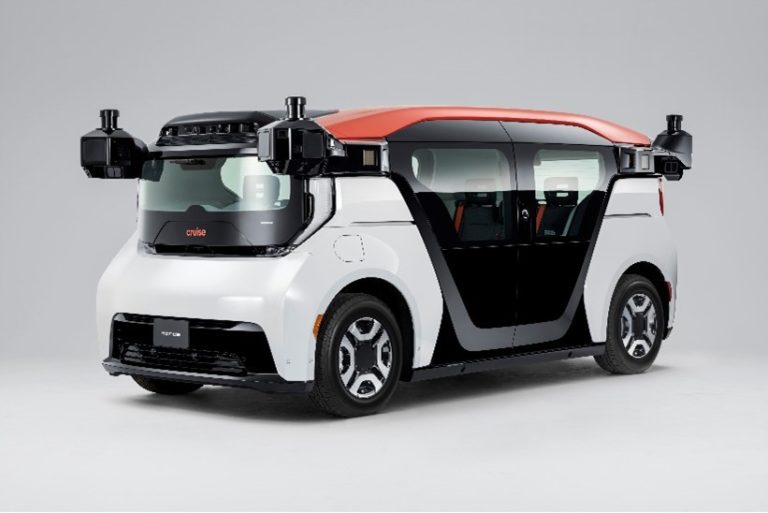
United States President Donald Trump has directed the Secretary of Transportation to approve the manufacture and sale of smaller compact cars in the American market. This move targets vehicles akin to those prevalent in Asian countries like Japan, South Korea, and Malaysia, where compact models dominate urban mobility. The announcement underscores a shift away from prior regulatory frameworks that prioritized larger vehicles through stringent fuel economy mandates.
The directive comes amid the Trump administration’s recent repeal of Biden-era Corporate Average Fuel Economy (CAFE) standards. Those rules had mandated progressive increases in fleet-wide efficiency, reaching 50.4 miles per gallon for passenger cars and light trucks by model year 2031. Implementation would have compelled automakers to invest heavily in electrification and downsizing, but the reversal eliminates those targets, freeing manufacturers to pursue diverse vehicle sizes without penalty.
Secretary of Transportation Sean Duffy received explicit instructions to expedite approvals for production. Trump emphasized vehicles from established brands such as Honda and Toyota, which already produce compact models overseas but face barriers in the US due to safety and emissions regulations tailored to bigger chassis. The policy aims to introduce cars under 3,500 pounds curb weight, contrasting with the average US new vehicle at 4,500 pounds.
Automakers stand to benefit from reduced compliance costs associated with CAFE. The standards previously imposed fines of up to $14 per tenth of a mile per gallon below targets, accumulating billions in penalties for non-compliant fleets. By lifting these, the administration projects lower sticker prices on entry-level models, potentially by 10 to 15 percent for compacts imported or built domestically.
This regulatory pivot aligns with broader automotive industry trends toward affordability amid softening electric vehicle demand. US new car average transaction prices hovered at $48,000 in late 2025, pricing out budget-conscious buyers. Compact cars, often retailing below $25,000 abroad, could fill this gap, drawing from designs like the Honda Fit or Toyota Yaris that emphasize efficiency without hybrid complexity.
Safety considerations remain central to the approvals process. Federal Motor Vehicle Safety Standards (FMVSS) require adaptations for smaller footprints, including enhanced crash structures and advanced driver-assistance systems. The National Highway Traffic Safety Administration will oversee modifications to ensure equivalence with full-size counterparts, a process that delayed similar imports in prior decades.
Economic implications extend to manufacturing footprints. Domestic assembly of compacts could revitalize plants in the Midwest, where idled capacity from declining sedan sales lingers. General Motors shuttered four factories since 2018, shifting to SUVs and trucks that command higher margins. Reintroducing smaller vehicles might employ 5,000 to 10,000 workers per facility, per industry estimates from the United Auto Workers.
Consumer access to these models hinges on swift rulemaking. The Department of Transportation must finalize exemptions within 90 days, allowing initial imports by mid-2026. Honda has signaled readiness, with prototypes already compliant in 80 percent of categories. Toyota anticipates scaling US production of a subcompact platform shared with its Aygo model in Europe.
Trade dynamics factor into the equation. While the policy welcomes Asian imports, tariffs on Chinese-made compacts persist at 27.5 percent under Section 301 duties. This shields domestic players like Ford, which plans a compact crossover on its global B-car architecture by 2027. The United States-Mexico-Canada Agreement facilitates North American sourcing, minimizing duties for qualifying builds.
Environmental advocates decry the rollback as a setback for emissions reductions. CAFE compliance had projected 1.8 billion fewer metric tons of greenhouse gases by 2050. Without it, reliance on internal combustion engines in compacts could sustain oil demand at 20 million barrels daily through the decade. Automakers counter that market-driven electrification, via models like the Chevrolet Bolt, will offset impacts.
The automotive sector anticipates ripple effects on supply chains. Steel and aluminum usage drops for lighter vehicles, easing pressure on North American mills strained by truck-heavy output. Battery suppliers may pivot resources to larger EVs, where margins exceed 20 percent versus 8 percent for compacts.
Dealership inventories could diversify rapidly. Current US lots feature 70 percent SUVs and trucks, limiting choices for city dwellers. Compact influxes might boost sales volumes by 500,000 units annually, according to Cox Automotive forecasts, stabilizing revenues hit by 2 percent market contraction in 2025.
This policy crystallizes a pro-consumer stance in the industry’s evolution. As electrification costs fall—lithium-ion packs now at $90 per kilowatt-hour—hybrids in compact form emerge as viable bridges. Toyota’s forthcoming bZ1x, a sub-$30,000 EV variant, exemplifies the blend of size efficiency and green tech.
Long-term, the directive challenges Detroit’s SUV fixation. Legacy brands hold 55 percent share in crossovers, but compacts could erode that by appealing to millennials, who favor urban practicality. Ford’s CEO Jim Farley noted in a recent earnings call that “right-sizing the portfolio” demands such flexibility.
The transportation secretary’s office confirms consultations with the Environmental Protection Agency to harmonize emissions rules. Post-approval, automakers face annual reporting on fleet composition, ensuring no full retreat from zero-emission goals.
This development positions the US as more competitive globally, where compacts comprise 40 percent of sales in Europe. By easing entry, it fosters innovation in lightweight materials like high-strength steel, reducing vehicle mass by up to 300 pounds per model.