Lexus Previews LFA Successor Ahead of December Debut
Lexus positions its forthcoming supercar as a spiritual heir to the original ‘LFA’, blending high-revving internal combustion with hybrid augmentation for superior track credentials. Toyota Gazoo Racing teases the model alongside two variants of the ‘GR GT’ sports car, signaling a dual-pronged assault on performance segments. The trio emerges from shadows in official imagery, their taillight signatures hinting at shared engineering roots in carbon-fiber chassis and advanced aerodynamics.
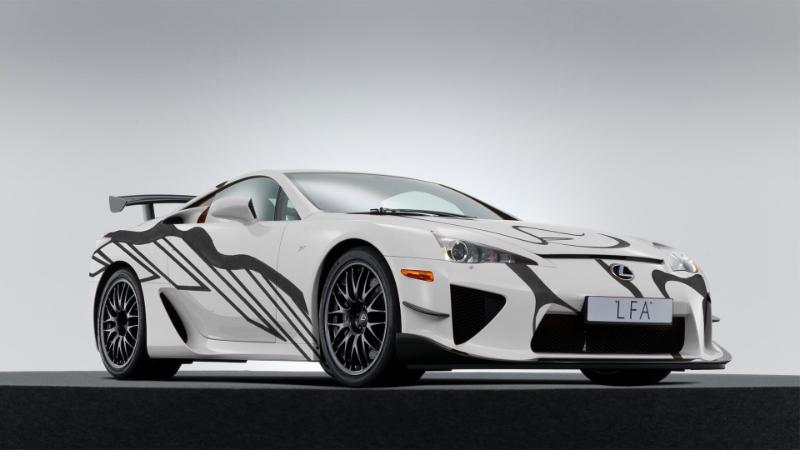
The Lexus prototype draws from the ‘LF-S Concept’ displayed at the 2025 Japan Mobility Show, featuring a front-mid engine layout and rear-wheel drive. Spied test mules suggest a twin-turbocharged 4.0-liter V8 paired with electric motors, targeting combined outputs exceeding 800 horsepower. This powertrain evolves the ‘LFA”s Yamaha-tuned V10 legacy, prioritizing torque fill from low revs while sustaining peak power beyond 7,000 rpm. Front fascia incorporates active aero elements, including deployable flaps for downforce optimization at speeds over 150 mph.
Toyota’s ‘GR GT’ anchors the reveal as a combustion-focused halo for its Gazoo Racing division, eschewing badges in favor of pure performance branding. The coupe employs a similar V8 hybrid setup, tuned for 800 horsepower from the engine alone, with hybrid assist pushing totals higher. Chassis utilizes GT3-derived suspension geometry, featuring double-wishbone fronts and multi-link rears calibrated for Nürburgring lap times under 7 minutes. Weight distribution targets 45:55 front-to-rear, aided by a 100-kilogram lighter carbon tub versus the ‘LC 500’.
A third vehicle in the teaser appears as a track-only ‘GR GT3’ racer, homologated for endurance series like the World Endurance Championship. It strips interior luxuries for a roll cage and sequential gearbox, retaining the core V8 for qualifying bursts over 200 mph. Lexus variants adapt this for road use, incorporating noise-vibration-harshness mitigation through acoustic foam and active mounts. Production volumes remain capped, mirroring the original ‘LFA”s 500-unit run, with pricing projected above $400,000.
Development spans five years under Toyota’s ‘Apex’ program, integrating lessons from Le Mans prototypes. The V8 derives from the ‘Land Cruiser 300”s unit, enlarged to 4.0 liters with parallel twins and electric supercharging for transient response. Battery pack, a 1.5-kilowatt-hour lithium-ion module, mounts rearward to preserve balance. Braking duties fall to carbon-ceramic discs, 410 millimeters front and 390 rear, sourced from Brembo with six-piston calipers.
US availability targets late 2026, following European homologation under Euro 7 emissions standards. Federal Motor Vehicle Safety Standards compliance demands adaptive headlights and Level 2 autonomy features, including traffic-jam assist. Toyota projects annual output of 200 units per model, prioritizing waitlists over dealer allocations. The ‘GR GT’ enters as a $250,000 entry point, undercutting Porsche ‘911 GT3 RS’ pricing while matching its 3.2-second 0-60 mph sprint.
Engineering emphasizes driver engagement, with a six-speed dual-clutch transmission featuring paddle-shift overrides. Suspension damping adjusts via 32 levels of magnetorheological fluid, tunable through steering-wheel modes. Tire fitment includes 275/35R20 fronts and 325/30R21 rears, Michelin Pilot Sport Cup 2 rubber for grip exceeding 1.4 g laterally. Fuel economy idles at 18 mpg combined, reflecting the V8’s thirst under aggressive use.
Rivals include the McLaren ‘720S’ and Ferrari ‘296 GTB’, though Lexus differentiates via hybrid efficiency without full electrification. The platform shares 60 percent components with the ‘GR GT’, enabling cost synergies in titanium exhausts and forged aluminum subframes. Wind-tunnel data claims a 0.32 drag coefficient, with underbody diffusers generating 400 pounds of downforce at 100 mph.
Launch coincides with Toyota’s 2026 motorsports calendar, including Imola and Spa entries for the GT3 variant. US enthusiasts access via Lexus Performance Driving Centers, offering track days with factory instructors. The reveal livestream originates from Tokyo’s Fuji Speedway, broadcasting at 9 p.m. Eastern time. Post-debut, prototypes tour Goodwood Festival of Speed in July 2026.
This offensive revives Japan’s supercar prominence, dormant since the ‘LFA”s 2012 exit. Toyota invests $500 million in the program, spanning R&D and Georgia facility expansions for carbon parts. Sales forecasts peg 150 US deliveries annually, bolstering Lexus’s 8 percent market share in luxury performance. The models challenge Detroit’s V8 monopoly, importing hybrid tech refined in ‘Prius’ platforms.