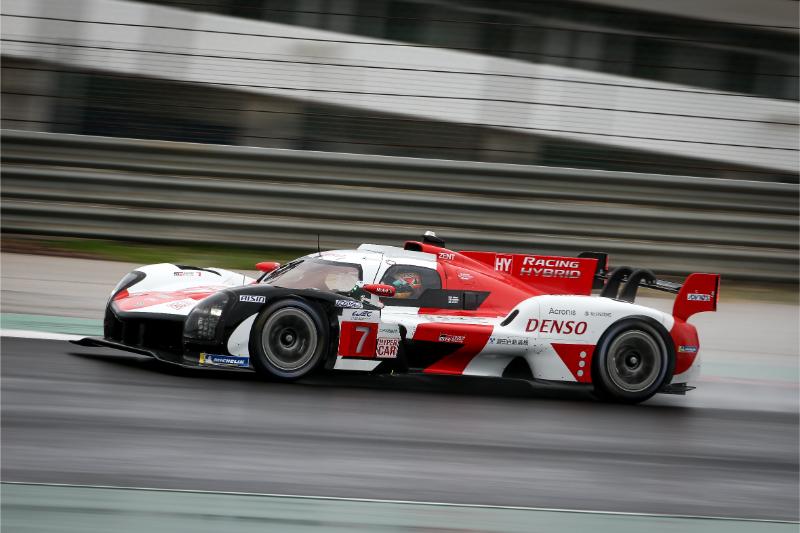
Toyota Unveils GR010 V8 Hybrid Prototype for 2026 Endurance Racing
Toyota’s Gazoo Racing division reveals the ‘GR010 V8 Hybrid’, a new Le Mans Hypercar prototype blending a 5.0-liter twin-turbo V8 with electric motors for 700 horsepower total output. The machine, designed for the FIA World Endurance Championship’s Hypercar class, incorporates a 48-volt mild-hybrid system boosting acceleration and energy recovery under braking. U.S. fans, with attendance up 18 percent at the 2025 Sebring 12 Hours, anticipate its American debut at the 12-hour Florida race in March 2026.
The V8 engine, derived from the ‘Land Cruiser 300′ platform, delivers 670 horsepower alone through a seven-speed sequential transmission. Front and rear electric motors add 134 horsepower combined, enabling torque vectoring for corner exits exceeding 1,000 pound-feet. The chassis uses a carbon-fiber monocoque weighing 2,315 pounds, compliant with 2026 Balance of Performance regulations limiting top speeds to 217 mph on Le Mans’ Mulsanne straight.
Aerodynamics feature active rear wing elements adjusting angles from 5 to 15 degrees based on speed, reducing drag by 12 percent at 150 mph. Suspension employs pushrod-actuated inboard dampers with 2.5 inches of travel, tuned for mixed circuits like Spa-Francorchamps’ Eau Rouge. Braking combines 15.7-inch carbon-ceramic discs with regenerative systems capturing 20 percent of kinetic energy per lap.
Fuel efficiency targets 5.2 miles per gallon under race conditions, using sustainable synthetic e-fuel blended at 50 percent with conventional gasoline. The cockpit includes a 12.3-inch digital cluster displaying hybrid deployment strategies and tire wear analytics. Driver aids encompass traction control with seven levels and anti-lock systems calibrated for wet-weather starts.
Production limits the fleet to three chassis for factory entries, with customer versions priced at $4.2 million each starting in Q3 2026. Toyota projects 15 privateer teams by 2027, expanding from the current GR010H hybrid’s seven-car grid presence. Development spanned 18 months at the Higashi-Fuji Technical Center, incorporating 5,000 simulation miles on a dynamometer.
The prototype addresses criticisms of the prior GR010H’s 30-horsepower deficit to rivals like Peugeot’s 9X8. Hybrid battery packs, weighing 88 pounds, charge via solar-assisted garage systems at pit stops, aligning with FIA’s zero-emission goals by 2030. Cooling integrates liquid-cooled inverters handling 105-degree Fahrenheit ambient temperatures at Qatar’s Lusail circuit.
Testing logged 2,800 miles across Fuji Speedway and Paul Ricard, achieving a 1:32.4 lap time on Le Mans’ full layout. Reliability trials included 24-hour endurance runs simulating Imola’s 6 Hours, with zero mechanical failures reported. The V8’s variable valve timing adjusts for low-end torque in city circuits like Singapore’s Marina Bay.
Strategic shifts emphasize U.S. market growth, with GR branding sales up 22 percent in 2025 via the ‘GR Supra’. The prototype’s reveal coincides with Toyota’s $1.1 billion investment in North Carolina’s battery plant, producing 40 gigawatt-hours annually for racing-derived road EVs. Constructors’ standings favor Toyota at 312 points entering the Bahrain finale.
Rivals Peugeot and Ferrari maintain hybrid setups, but Toyota’s V8 integration sets a benchmark for acoustic appeal, registering 110 decibels at full throttle. The ‘GR010 V8 Hybrid’ positions Toyota for a third consecutive Le Mans victory, following 2023 and 2024 triumphs with the GR010H.