Chinese Carmakers Surpass South Korean Rivals in Western Europe Sales
Chinese automakers secure an 8 percent share of new car registrations in Western Europe for September, edging out South Korean competitors at 7.8 percent. This milestone reflects accelerated adoption of affordable electric models amid tightening emissions regulations. Japanese brands, trailing at 6.5 percent, face the steepest declines due to delayed EV transitions.
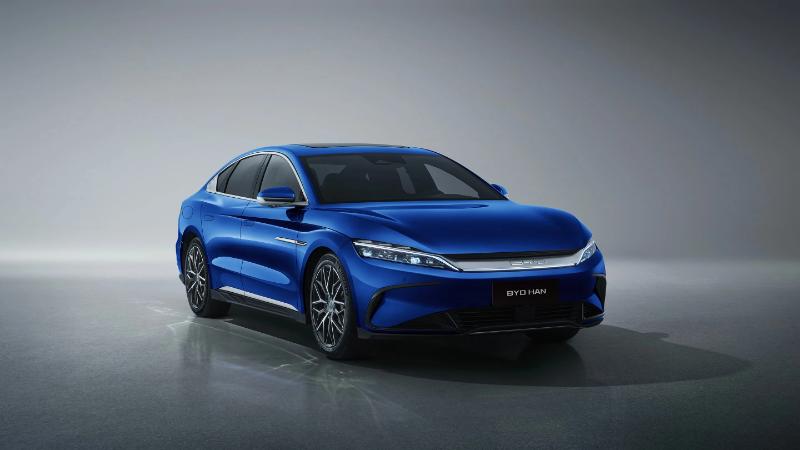
BYD leads the Chinese surge with 2.1 percent of the European market, driven by the ‘Atto 3’ crossover that sold 18,000 units last month. Geely follows at 1.4 percent, bolstered by the ‘Geometry’ series hybrids achieving 12,500 registrations. SAIC’s MG brand contributes 1.2 percent through the ‘ZS EV’ compact SUV, which moved 9,200 vehicles. These figures stem from data compiled by the European Automobile Manufacturers’ Association, covering 15 countries including Germany, France, and Italy.
South Korean market penetration dips from 8.2 percent in August, with Hyundai’s ‘Kona Electric’ dropping 15 percent year-over-year to 7,800 units. Kia records 6,200 sales for the ‘Niro’ hybrid, constrained by supply chain bottlenecks in battery production. The shift coincides with EU tariffs of 17 to 35 percent on Chinese imports, yet volume growth persists via local assembly in Hungary and Poland.
Japanese incumbents lose ground as Toyota’s overall share falls 22 percent to 3.8 percent, hampered by the ‘bZ4X’ EV’s mere 2,100 units amid software recall issues. Honda and Nissan combine for 2.7 percent, with Nissan’s ‘Leaf’ EV stagnating at 1,800 sales due to outdated battery chemistry. Legacy gas models like Toyota’s ‘Corolla’ hybrid account for 60 percent of their European volume, vulnerable to the 2035 combustion engine phase-out.
Western Europe’s total registrations reached 1.1 million in September, up 4.2 percent from August but flat year-over-year. Chinese exports to the region total 92,000 vehicles last month, a 28 percent increase from September 2024. This expansion supports China’s global auto export tally of 5.2 million units through October, capturing 38 percent of worldwide sales.
For U.S. stakeholders, the European trend signals intensifying pressure from Chinese EV pricing, averaging 20 percent below Korean equivalents at 28,000 euros for entry-level models. American executives anticipate eventual market entry, with 76 percent in a Kerrigan Advisors survey predicting Chinese vehicles by 2028 despite 100 percent tariffs. Domestic brands like General Motors and Ford eye joint ventures to counter cost advantages in lithium-iron-phosphate batteries.
Chinese firms leverage vertical integration, producing 68 percent of global NEVs through October. BYD’s blade battery design offers 500 kilometers of range per charge, surpassing Hyundai’s 450 kilometers in comparable segments. Geely’s SEA platform underpins 15 models with adaptive air suspension standard on exports.
Regulatory adaptations in Europe include homologation under WLTP testing, where Chinese EVs average 15 percent better efficiency than Korean rivals. Infrastructure investments, such as 200,000 new chargers installed in 2025, facilitate uptake in urban centers like Paris and Berlin.
The pivot underscores a broader reconfiguration of Asian supply chains. South Korean battery makers like LG Energy Solution supply 40 percent of Chinese exports, mitigating tariff impacts. Japanese firms, however, report 1.2 billion yen in lost revenue from EV delays.
Projections indicate Chinese share could hit 12 percent in Europe by 2027, assuming tariff stability. U.S. policymakers monitor this for trade reciprocity, with potential implications for North American Free Trade Agreement revisions. Carmakers in Detroit allocate 15 percent of R&D budgets to hybrid countermeasures, per Alliance for Automotive Innovation filings.