Tesla’s FSD Outperforms Waymo During San Francisco Power Outage
A widespread power outage struck San Francisco on December 21, 2025, affecting approximately 130,000 PG&E customers at its peak. The blackout caused traffic signals to fail across large sections of the city. Waymo’s driverless robotaxis encountered significant difficulties in these conditions. Multiple vehicles stalled at intersections, leading to traffic backups and gridlock.
Videos and images shared on social media showed Waymo SUVs stopped with hazard lights flashing, unable to proceed through darkened intersections. Waymo temporarily suspended its ride-hailing service in the San Francisco Bay Area to prioritize safety and allow emergency access. The company coordinated with city officials during the disruption.
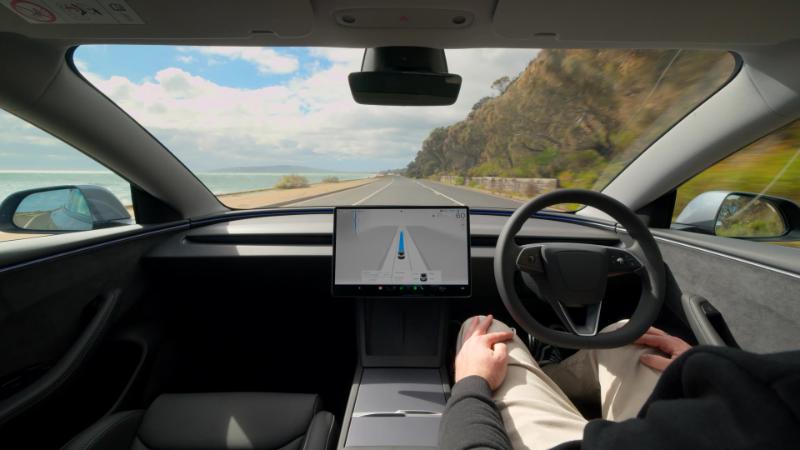
In contrast, Tesla vehicles equipped with Full Self-Driving (FSD) capability continued operating without interruption. FSD relies on vision-based neural networks trained on billions of real-world driving miles, including scenarios with non-functional traffic lights. Tesla owners reported their vehicles navigating the affected areas successfully, treating dark signals as four-way stops.
This incident highlighted architectural differences between the two systems. Waymo’s approach incorporates high-definition maps and multiple sensors, including LiDAR, which can depend on precise infrastructure cues. Tesla’s system processes data entirely onboard, without requiring external network connectivity or pre-mapped signals for basic operation.
The outage originated from a substation issue, disrupting not only traffic but also public transit systems. Waymo resumed service once power stabilized, stating it would integrate lessons from the event to improve resilience.
Tesla’s energy division separately advanced its grid-scale storage lineup. Neoen Australia initiated construction on a $220 million battery project featuring the debut deployment of Tesla’s Megablock system. Megablock integrates four Megapack 3 units into a pre-assembled 20 MWh block with built-in transformer and switchgear.
This design enables 23 percent faster installation and up to 40 percent reduced construction costs compared to previous configurations. Megapack 3 units deliver 5 MWh capacity each, using LFP cells and advanced thermal management derived from vehicle technology. Production ramps at Tesla’s forthcoming Houston Megafactory in 2026, targeting 50 GWh annual output.
The Australian project underscores growing demand for large-scale storage to support renewable integration. Tesla’s Autobidder software will optimize energy trading and grid services for the facility.
Rivian demonstrated progress in driver assistance with its Universal Hands-Free feature, handling back roads autonomously in early tests. The company plans point-to-point navigation updates in 2026, positioning it closer to advanced systems.
Porsche released a holiday advertisement blending hand-drawn 2D art with 3D animation, explicitly avoiding AI generation tools.
These developments reflect ongoing competition and innovation across autonomy, energy storage, and vehicle technology sectors.