Renault Filante Record 2025 Concept Achieves EV Efficiency Milestone
Renault engineers deployed the Filante Record 2025 concept vehicle to establish a new benchmark in electric vehicle energy consumption. The single-seater streamliner completed a measured run demonstrating exceptional aerodynamic and powertrain optimization. This effort highlights advancements in minimizing drag and maximizing range per kilowatt-hour.
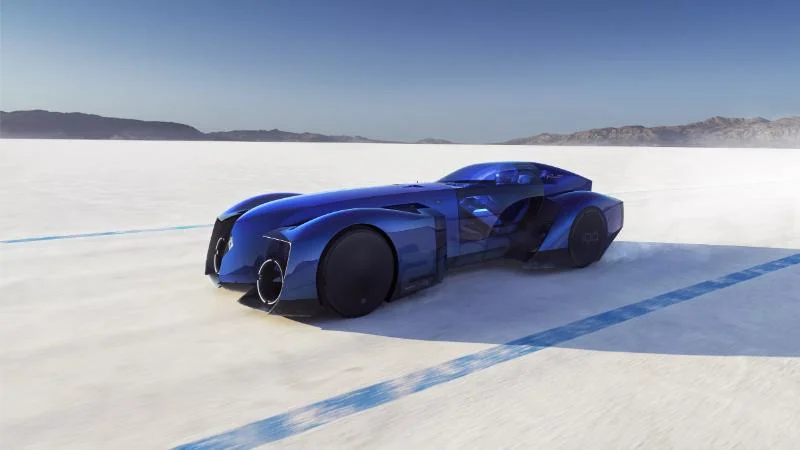
The concept incorporates a closed-wheel design with fully enclosed bodywork to reduce aerodynamic resistance. Power derives from a compact electric motor paired with a lightweight battery pack focused on efficiency rather than peak performance. Renault targeted real-world conditions to validate the vehicle’s low-energy profile.
Testing occurred on a controlled circuit where the Filante consumed minimal electricity over distance traveled. Engineers recorded data showing superior coefficients compared to production EVs currently available. The streamlined form eliminates traditional mirrors, replacing them with camera systems for further drag reduction.
Renault applied lessons from motorsport aerodynamics to the concept’s development. Carbon fiber components dominate the chassis and body to maintain low mass despite the enclosed structure. The vehicle features active ride height adjustment to optimize ground clearance at varying speeds.
This demonstration positions Renault among leaders pursuing hyper-efficient electric architectures. The company emphasizes practical applications for future production models aiming at extended range capabilities. Data gathered informs ongoing research into battery chemistry and thermal management systems.
The Filante Record 2025 serves as a rolling laboratory for multiple technologies. Regenerative braking calibration maximizes energy recapture during deceleration phases. Tire selection prioritizes low rolling resistance while preserving grip levels required for safe handling.
Renault’s engineering team documented the entire process to share technical insights with industry partners. The concept achieves its efficiency without compromising structural integrity or safety standards. Results validate computational fluid dynamics models used in initial design phases.
This milestone reinforces Renault’s commitment to advancing electric mobility through targeted innovation. The vehicle operates silently with instantaneous torque delivery characteristic of electric propulsion. Future iterations may incorporate even denser energy storage solutions currently under evaluation.
The achievement underscores the potential for specialized designs to push EV boundaries beyond conventional formats. Renault continues refining the platform for potential limited-series applications. This effort contributes to broader industry goals of sustainable long-distance electric travel.