Corvette ZR1 Dyno Test Reveals It Is Stronger Than Factory Claims
The automotive world was already stunned when Chevrolet announced the official specifications for the new Corvette ZR1. This American supercar boasts a twin-turbocharged 5.5-liter V8 engine that is rated at a massive 1,064 horsepower from the factory. Such a figure places it well above many exotic competitors costing significantly more money. However, recent independent testing suggests that General Motors may have been intentionally conservative with these numbers. It appears the engineering team at Chevrolet has delivered a machine that exceeds its own marketing materials.
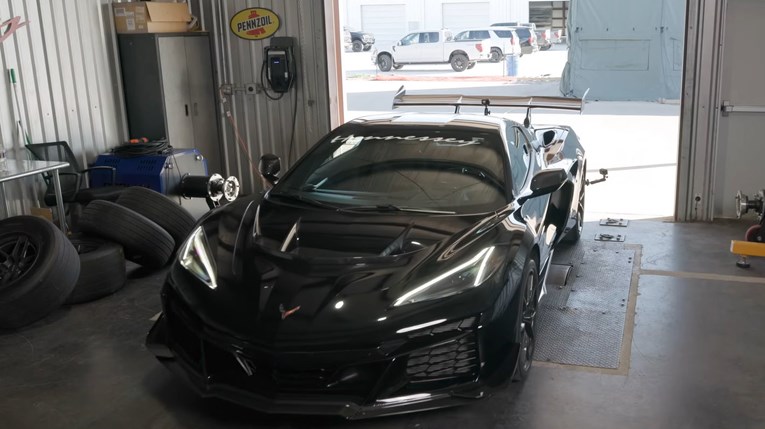
Hennessey Performance recently acquired their own example of the highly anticipated vehicle to begin development on upgrade packages. Before modifying the car, the Texas-based tuner needed to establish a baseline of performance to understand what they were working with. The team drove the car for a break-in period covering roughly 2,000 miles to ensure the mechanical components were properly settled. Once the engine and transmission were ready for maximum stress, they strapped the Corvette to their dynamometer for testing. The results of this session have sparked intense discussion among automotive enthusiasts.
A dynamometer measures the power output specifically at the wheels rather than at the engine crank. This distinction is crucial because energy is always lost as it travels through the transmission, driveshaft, and axles before reaching the tires. A standard rule of thumb for modern performance cars suggests a drivetrain loss of roughly ten to fifteen percent. Therefore, a car rated at 1,064 horsepower at the crank should theoretically show significantly lower numbers at the wheels. Enthusiasts expected to see a figure somewhere in the range of 900 to 950 wheel horsepower.
The dyno run conducted by Hennessey Performance shattered those expectations by recording 1,051 horsepower directly at the rear wheels. This number is shockingly close to the factory rating for the engine itself and implies a much higher actual output. If one accounts for the parasitic loss inherent in the drivetrain, the engine is likely producing well over 1,100 horsepower at the crank. Some estimates suggest the true figure could be nearing 1,200 horsepower when corrected for environmental factors and mechanical friction. This practice of underrating engine output is not uncommon in the industry, but the margin here is extraordinary.
This revelation cements the ZR1 status as a true hypercar destroyer that punches far above its weight class. Chevrolet has engineered a vehicle that does not just meet its promised targets but seemingly obliterates them. The LT7 engine is proving to be a marvel of modern internal combustion engineering. Owners can now drive with the confidence that their vehicle is even more capable than the spec sheet indicates.
Let us know what you think about manufacturers underrating their performance cars in the comments.