Euro NCAP Now Tests Trucks And Here Is How It Looks
Most people associate the European New Car Assessment Programme with dramatic footage of passenger cars smashing into walls. The organization has built a reputation over the decades for testing vehicle safety through high-speed impact assessments that crumple metal and shatter glass. However, the scope of their safety evaluations has recently expanded significantly to include heavy commercial vehicles. This new initiative marks a major shift in how road safety is calculated for the largest vehicles on our highways.
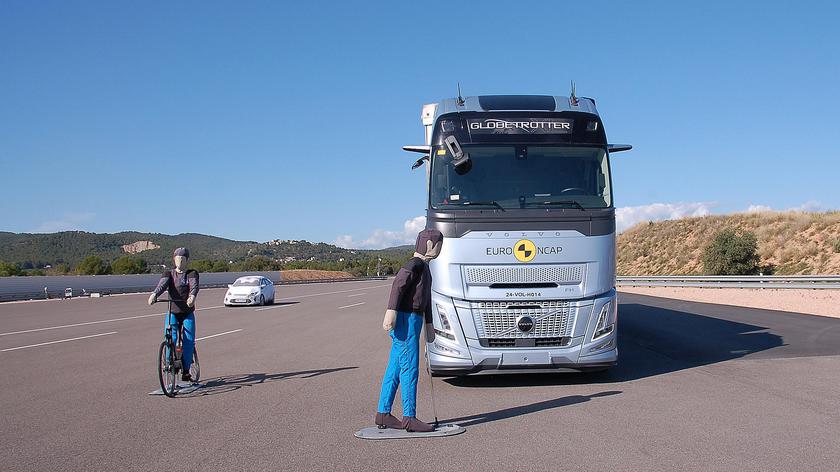
The testing procedure for these massive trucks differs fundamentally from the standard car crash tests. Engineers do not drive eighteen-wheelers into concrete barriers to see how the cabin holds up during an impact. The primary focus for heavy vehicles is not on passive safety or how well the occupants survive a crash. Instead, the assessments prioritize active safety systems that prevent accidents from happening in the first place.
Dubravko Kolarić reported on this development and highlighted that the protection of vulnerable road users is a key metric. This includes pedestrians and cyclists who are at the greatest risk when sharing the road with large transport vehicles. The tests rigorously evaluate how well a truck can detect these individuals and automatically intervene to avoid a collision. Visibility from the driver’s seat plays a massive role in the final score.
A recent standout in this new testing regime is the Scania L-series which was tested in a configuration often used for refuse collection. This specific model featured an electric powertrain producing around 362 horsepower and achieved the maximum five-star rating. It also earned the prestigious ‘CitySafe’ accreditation which recognizes vehicles specifically designed to minimize risks in urban environments. This result demonstrates that heavy utility vehicles can be engineered to be exceptionally safe for city streets.
The evaluation process involves a detailed analysis of driver assistance systems and autonomous braking efficiency. Testers look at how the vehicle behaves in typical traffic scenarios such as turning at intersections or moving from a standstill. Special attention is paid to situations where a cyclist might be riding alongside the truck or a pedestrian steps out in front of it. These are the most common danger zones for city logistics and municipal services.
Municipal vehicles and trucks designed for urban tasks present a unique challenge for manufacturers. The high scores achieved by models like the Scania L-series show that safety can be integrated into the very foundation of heavy vehicle design. Advanced sensors and camera systems are now just as critical as the engine or the chassis. This evolution in testing standards pushes the entire industry toward a future where heavy trucks are guardians of the road rather than potential hazards.
Share your opinion on whether these new safety standards for heavy trucks will make city streets safer for pedestrians and cyclists in the comments.