Mazda Secretly Built a V6-Powered MX-5 Prototype but Ultimately Abandoned It
Mazda’s iconic MX-5 has always stood out for its lightweight design, precise handling, and modest four-cylinder power. Enthusiasts have long dreamed of more muscle under the hood, and it turns out company engineers once explored that very idea in a clandestine way. About twenty years ago, a group of passionate Mazda team members took it upon themselves to create a secret prototype by fitting a V6 engine into the roadster during their off-hours. This hands-on experiment stemmed from pure curiosity about how extra power might transform the car’s driving experience without any official backing from management.
The chosen powerplant was a 2.5-liter V6 borrowed from Mazda’s K-series lineup, the same family used in models like the MX-6 and Millenia. In its strongest factory tune, that engine delivered around 200 horsepower, offering roughly 40 more ponies than the top four-cylinder MX-5 available back then, which peaked near 160 horsepower. The engineers managed to squeeze it into the engine bay and got the car running, and according to those involved, the result felt technically exciting on the road. It sharpened acceleration and added a thrilling character that made drives more engaging, proving the concept had real potential in terms of performance.
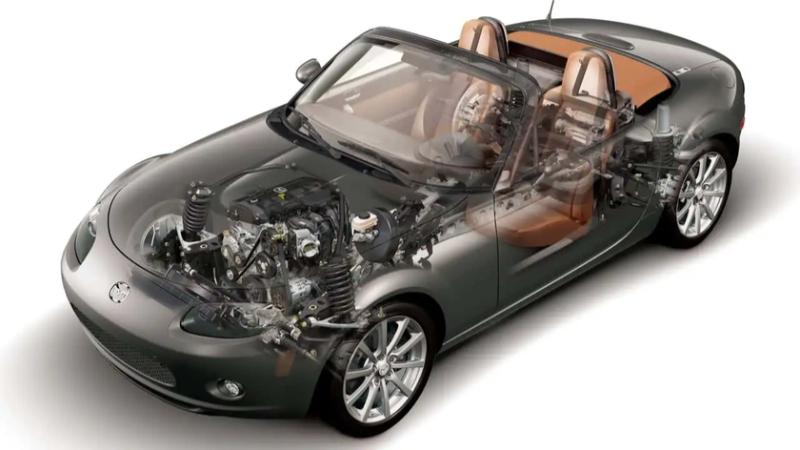
However, significant hurdles quickly became apparent. The V6 sat too high in the compact front end, forcing compromises that altered the MX-5’s sleek proportions in an unappealing way. Raising the hood line disrupted the car’s elegant, low-slung look, which is a cornerstone of its appeal. Beyond aesthetics, the heavier engine shifted weight forward, throwing off the near-perfect 50:50 balance that defines the MX-5’s nimble handling and fun-to-drive nature. Weight is considered the biggest enemy in this lightweight sports car, and adding more up front would have demanded extensive reworking of the chassis, suspension, cooling, and even safety features.
Financial and practical realities sealed the project’s fate. Turning the prototype into a production reality would have required major investments, plus adaptations to meet tightening emissions and safety regulations, driving up costs for a niche model. Mazda chose to stay loyal to its core philosophy of keeping things light, balanced, and affordable rather than chasing higher power at the expense of purity. Even today, the most potent factory MX-5 variants top out around 197 horsepower in limited Japanese editions, sticking firmly to four-cylinder engines.
Christian Schultze, Mazda’s head of development in Europe, recently shared details of this hidden chapter in an interview. He described the effort as a fascinating side project born from enthusiasm, noting how interesting it was to experience despite its flaws. The story serves as a reminder of the dedication within Mazda’s engineering ranks and why the brand has resisted temptation to overhaul the MX-5 formula over the decades.
What do you think about a V6 MX-5—would more power have been worth the trade-offs, or is the current lightweight approach still the best? Share your thoughts in the comments.