Volkswagen Increases Rivian Investment to 5.8 Billion as Joint Venture Launches
Volkswagen Group and Rivian Automotive have officially closed their highly anticipated joint venture agreement, with the German automaker increasing its total committed investment to $5.8 billion. The deal, which formally establishes the new entity known as “Rivian and VW Group Technology, LLC,” aims to integrate Rivian’s advanced electrical architecture and software into Volkswagen’s future vehicle lineup. This finalized figure represents an $800 million increase over the initial capital projection announced earlier this year, signaling Volkswagen’s urgent need to rectify persistent software challenges.
The joint venture will operate out of Palo Alto, California, with additional sites planned for North America and Europe to support a global engineering roadmap. Rivian’s Chief Software Officer, Wassym Bensaid, and Volkswagen Group’s Chief Technical Engineer, Carsten Helbing, have been appointed as co-CEOs to lead the new operation. Their immediate mandate is to adapt Rivian’s zonal hardware design and integrated software stack for a broad range of vehicles, from entry-level hatchbacks to luxury SUVs.
Under the terms of the agreement, Volkswagen has already provided an initial $1 billion convertible note, with an additional $1.3 billion payment scheduled for closing. The remaining investment capital is structured around specific operational milestones and equity acquisitions that will disperse funds through 2027. This influx of liquidity is critical for Rivian, which continues to navigate the capital-intensive ramp-up of its R2 midsize SUV production at its Normal, Illinois facility.
For Volkswagen, the partnership effectively sidelines much of the internal development work previously tasked to its troubled Cariad software unit. Group CEO Oliver Blume described the partnership as a decisive step to strengthen the company’s global competitive position and expedite the delivery of digital features to customers. By leveraging Rivian’s existing technology, Volkswagen aims to bypass years of development time, targeting the launch of its first Rivian-powered models by 2027.
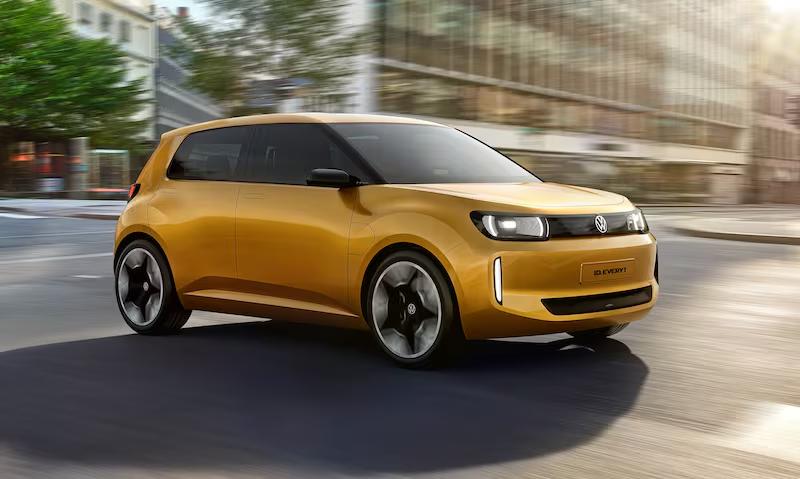
The technical focus of the venture centers on Rivian’s zonal electrical architecture, which drastically reduces the amount of wiring and electronic control units (ECUs) required in a vehicle. This simplification lowers manufacturing costs and weight while enabling more frequent and robust over-the-air (OTA) updates. The first tangible result of this collaboration is expected to be a Volkswagen-branded electric vehicle utilizing this architecture, followed shortly by an Audi model and eventually appearing in the resurrected Scout Motors lineup.
Industry analysts view this consolidation as a necessary survival strategy for legacy automakers struggling to match the software proficiency of pure-play EV manufacturers. While Rivian secures a financial runway to survive current market volatility, Volkswagen mitigates the risk of further delays in its ID. series rollout. The venture does not include joint battery production or powertrain hardware, keeping the collaboration strictly focused on the digital and electrical backbone of future fleets.