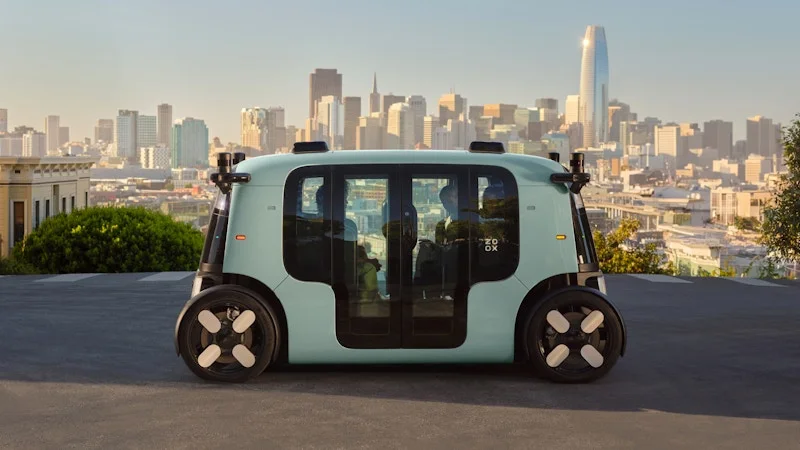
Amazon Owned Zoox Pulls Robotaxi Fleet Following Lane Safety Issues
Trust in fully autonomous driving systems has remained low for years, and recent developments involving an Amazon subsidiary are unlikely to improve public perception. According to a study conducted earlier this year by the non-profit driver association AAA, only 13 percent of respondents stated they would feel safe riding in a completely self-driving vehicle. This hesitation is often validated by real-world failures, such as the latest safety recall initiated by Zoox. The company has officially withdrawn all 332 of its robotaxis from operation after reports surfaced that the vehicles were behaving unpredictably in traffic.
The decision to pull the fleet comes after an internal investigation revealed that the cars were crossing double yellow center lines and entering opposing traffic lanes. In some instances, the vehicles would even stop directly in the path of oncoming cars, creating dangerous situations for other drivers. While there were no reported collisions or injuries associated with this specific flaw, the frequency of the errors was alarming enough to warrant immediate action. A subsequent analysis uncovered 62 similar incidents occurring over a period of just three months leading up to December.
Regulators at the National Highway Traffic Safety Administration (NHTSA) took note of these irregularities, pointing out in a report that the vehicles were unnecessarily crossing lane markers, particularly near intersections. Zoox has attributed these dangerous maneuvers to a combination of software bugs and the system’s misinterpretation of its surroundings. Specifically, the autonomous driving software struggled to correctly identify double-parked vehicles and reacted poorly to unexpected route changes.
In an attempt to navigate around obstacles without blocking traffic, the artificial intelligence made decisions that human drivers would likely consider reckless. The company described the system as trying to be “polite” in traffic, which inadvertently led it to violate basic traffic laws and endanger others. This software logic, intended to smooth the flow of vehicles, resulted in the cars drifting into lanes reserved for traffic moving in the opposite direction.
This is not the only recent setback for the autonomous vehicle industry, as competitors like Waymo and Cruise have faced similar scrutiny regarding safety protocols and software reliability. These recurring technical failures highlight the immense challenges engineers face in replicating the complex decision-making processes of a human driver. As companies race to patch their code and return their fleets to the road, the question of whether the technology is truly ready for widespread use remains open.
Share your opinion on whether you would trust an AI driver in busy city traffic in the comments.