Could BMW’s Neue Klasse Sedan Become a Munich Hit as Production Gets Underway
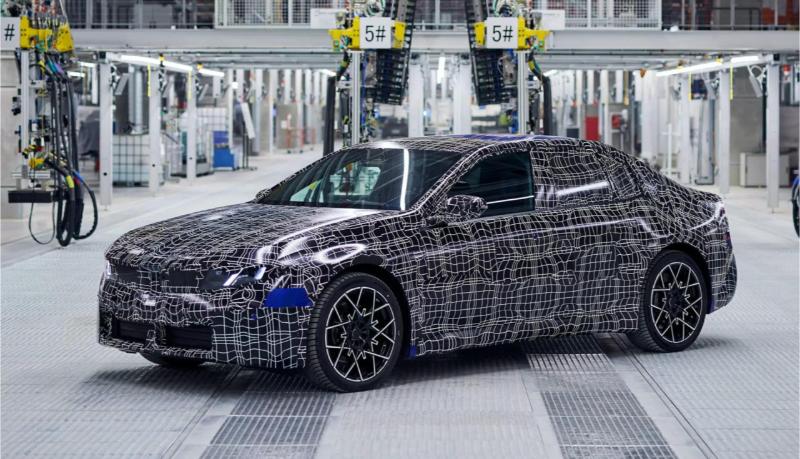
BMW’s push into its next era of electric vehicles just moved from camouflage and concept talk into real factory work. The first sedan built on the brand’s next generation architecture known as Neue Klasse has entered pre series production at BMW’s Munich plant. This car is expected to be the future electric BMW i3, and the shift matters because it means the project is now running through the same industrial steps a true production model will face. For years it mostly surfaced through spy shots and early previews, but now it is being treated like a vehicle that must meet everyday manufacturing reality.
Earlier prototypes were assembled partly in pilot facilities near BMW’s research center, which is common when a model is still being refined. The difference now is that pre series cars are being built through every key stage of the Munich factory process, including pressing, painting, and final assembly. BMW’s goal is to validate logistics, production flow, and quality checks before the start of series production planned for the second half of 2026. In other words, this is a dress rehearsal meant to expose weak points before customers ever see the finished product.
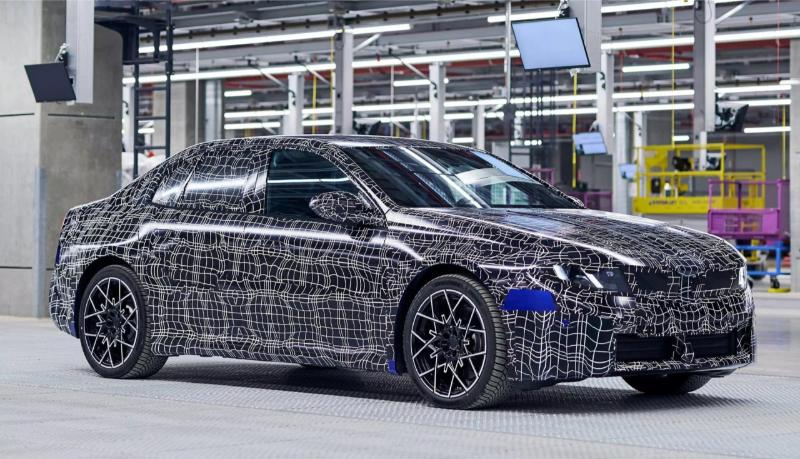
One of the most interesting threads is that BMW is effectively developing two different generations of the 3 Series at the same time. The electric i3 is being engineered on the dedicated Neue Klasse platform, while the gasoline and diesel 3 Series is expected to continue on an updated version of BMW’s CLAR architecture. The article notes this parallel development explicitly by calling them two different generations of the “3 Series” being created on two different platforms. Even if the two cars end up looking closely related, the underlying packaging and engineering priorities are not the same.
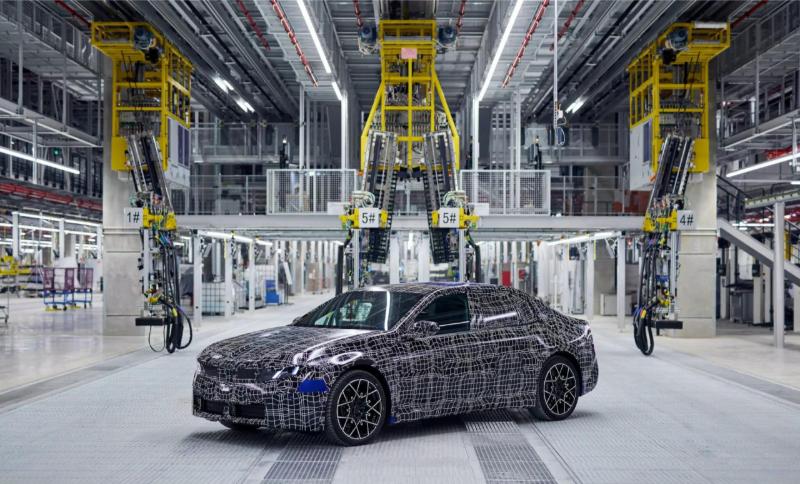
That split is already showing up in the details that can be spotted despite the remaining camouflage. The electric version is described as having a flatter roofline along with different proportions for the doors and windows. Its charging port location is also shifted compared with what you would expect on an internal combustion model. By contrast, the gasoline and diesel variants keep the traditional fuel filler door, which sounds obvious but also signals that BMW is not trying to force one body layout to do everything.
Inside, BMW appears to be working toward a shared design philosophy, at least at the concept level. Neue Klasse is tied to a new digital environment, including what BMW describes as a “floating central display” paired with a Panoramic iDrive display that stretches across almost the full width of the cabin. The promise here is not only a new platform but a rethink of how drivers interact with the car, especially as software becomes a bigger part of the ownership experience. If BMW executes it well, the interior tech could become as defining as the new batteries and motors.
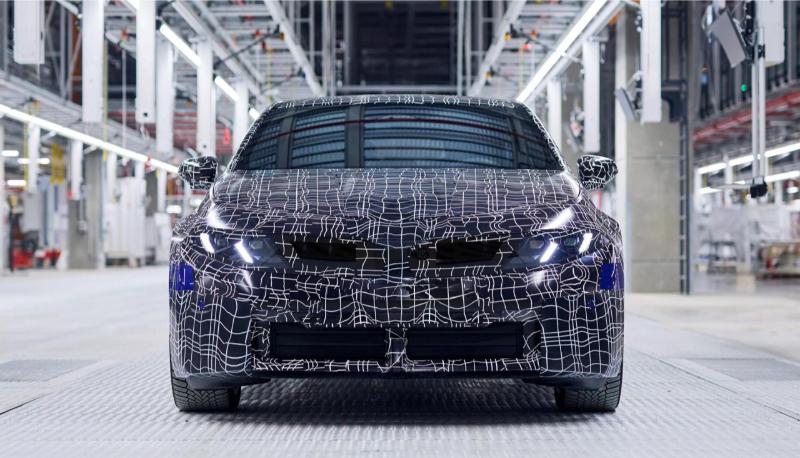
Hardware details are still being kept close, and the article is clear that technical specifications have not been officially confirmed. Even so, expectations are being set high based on available information circulating around the project. Stronger versions of the i3 are expected to deliver more than 460 horsepower, along with a large driving range and very fast DC charging. There should also be lower output versions with rear wheel drive, giving buyers a more affordable entry point while keeping the sporty layout BMW fans associate with the brand.
Performance headlines will not stop with the i3 badge, either. An electric M3 is already confirmed, although it is expected to arrive later rather than right at the start of the lineup. That timing makes sense because BMW will want to stabilize the core production ramp before adding a high performance variant with different thermal and power demands. It also keeps attention on the standard models first, which are likely to carry the volume that determines whether this launch is a true win.
For now, the camo remains, but the general rehearsal has begun. The article points toward a proper premiere later in 2026, with the first customers expected to take delivery in early 2027. If those dates hold, BMW will be trying to land the i3 at a moment when electric sedans are fighting for relevance against the public’s ongoing appetite for crossovers. That makes the Munich production milestone more than a factory footnote, because it is the point where strategy has to become repeatable output.
Neue Klasse itself is a name with history that goes beyond a single upcoming model. BMW originally used “Neue Klasse” in the early 1960s for a generation of sedans that helped define the modern BMW brand, both in design and in driving character. Bringing that label back is a deliberate signal that the company sees this electric platform shift as foundational rather than incremental. In modern terms, a dedicated EV architecture can improve packaging, open up interior space, and optimize weight distribution compared with adapting a platform built around engines and transmissions.
BMW’s Munich plant also carries symbolic weight in this story. Munich is deeply tied to the company’s identity, and using the site to run pre series builds suggests confidence that the Neue Klasse sedan is central to BMW’s near term roadmap. Pre series production is where manufacturing teams stress test everything from part supply to paint consistency, and it is also where design intent can collide with real world tolerances. When a company reaches this stage, it is no longer asking whether the car can be built in theory, but whether it can be built the same way thousands of times in a row.
What do you think will matter more for the i3, the Neue Klasse tech leap or the way BMW preserves the feel of a “3 Series” in an electric world, share your thoughts in the comments.