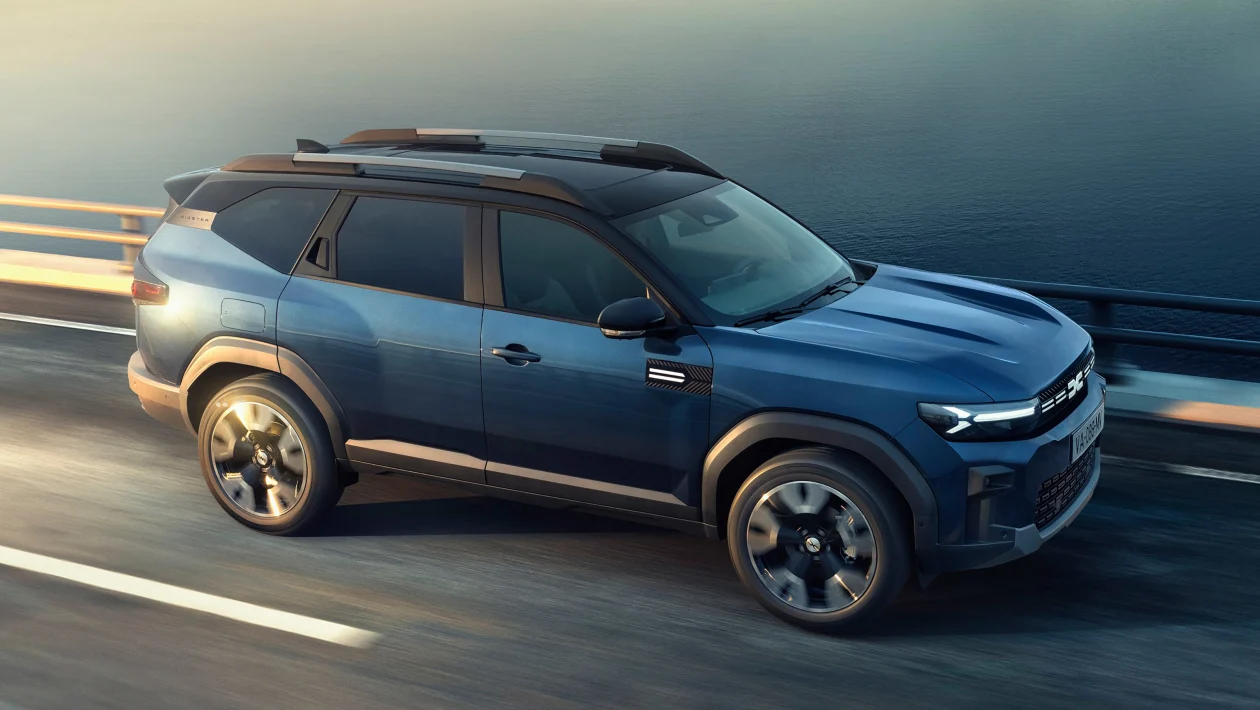
Dacia Bigster Is Already a Big Success Alongside Sandero and Duster With 100,000 Sold
Less than a year after arriving on the market, the Dacia Bigster has already hit a milestone that most new nameplates take far longer to reach. The brand confirmed that 100,000 examples of its largest and most ambitious model so far have rolled out of the Mioveni plant in Romania. That number matters because the Bigster is not a niche add on, it is Dacia pushing into a more demanding part of the SUV landscape. Early momentum suggests buyers have been waiting for a roomier Dacia that still sticks to the company’s value focused formula.
The Bigster’s story began years before customers could order one. It was first shown as a concept in 2021, then the production version was unveiled in the fall of 2024. Production began in early 2025, and the model reached most European markets by the middle of last year. Hitting 100,000 built in that timeframe shows how quickly it found its audience. It also signals that Dacia’s expansion plan is not just about adding another vehicle, but about moving up in size without losing its identity.
A big part of the appeal is that the Bigster reads like a logical step above the Duster. The vehicle promises more space, a more serious road presence, and noticeably richer technology, while keeping the brand’s core promise of strong value for the money. That positioning is important in a market where family buyers often want the footprint and practicality of a larger SUV, but do not want the price jump that comes with many mainstream badges. In other words, it targets people who have outgrown a smaller SUV, not people shopping for prestige.
Dacia is also leaning into electrified powertrains to broaden the Bigster’s reach. The lineup emphasizes mild hybrid systems and a full hybrid setup, aiming to cover everyday efficiency without forcing buyers into a full battery electric switch. Entry versions are mild hybrids rated at 140 horsepower, including a configuration designed to run on LPG with the same output. At the top end are hybrid variants on gasoline and on LPG, with total outputs of 156 horsepower and 153 horsepower. That spread is meant to fit everything from company fleets to families and private owners.
That wide range is one reason the Bigster is being treated as more than a single model launch. It is positioned to serve multiple buyer types in one package, including people who want a larger SUV for long highway trips and those who prioritize running costs and simple ownership. Dacia’s decision to offer an LPG focused path is especially telling because it is a practical solution in many European markets where autogas infrastructure and pricing make it attractive. Pairing that with hybridization gives customers several ways to lower fuel use without paying luxury brand money.
By placing the Bigster where it does, Dacia is intentionally stepping closer to the compact and mid size SUV battleground. The brand’s message is straightforward, usable space and toughness matter more than status. That is why the Bigster is frequently discussed as an alternative to significantly more expensive models, including vehicles within the broader Renault group and beyond it. It is not trying to win with fancy materials or premium image. It is trying to win by giving buyers what they actually use every day.
If demand holds at anything like the current pace, the Bigster could quickly become one of Dacia’s pillars in Europe. The company already has proven volume leaders, and the Bigster is being framed as a new companion to the Sandero and the Duster rather than a side project. For Dacia, that matters because a larger SUV can lift the brand’s overall presence in showrooms while still keeping prices within reach for mainstream buyers. For shoppers, it creates a new option in a segment that often feels overpriced for what it delivers.
It also helps to understand where the Bigster is built and what that says about Dacia’s approach. The Mioveni facility in Romania has long been central to Dacia’s output, and producing a higher profile model there reinforces the idea that the brand will scale up without changing its production philosophy. Dacia itself is part of the Renault group, and over the years it has grown from a budget focused regional player into one of Europe’s most visible value brands. That rise has been fueled by clear priorities like practicality, durability, and simple lineups that avoid unnecessary complexity.
In the bigger picture, the Bigster reflects a broader shift in what buyers want from SUVs. Many drivers are looking for family friendly room, easy entry and exit, and flexible cargo space, but they also want reasonable fuel consumption and manageable ownership costs. Mild hybrid systems typically add efficiency by supporting the engine during acceleration and enabling smoother stop start operation, while full hybrids can drive short distances using electric power at low speeds and blend power sources for better economy. The Bigster’s early success suggests that combining these ideas with a spacious SUV body is a formula that resonates.
Now that the Bigster has crossed 100,000 built, the next question is whether it can sustain that momentum as competitors respond and supply normalizes across markets. Do you see the Bigster as the kind of practical SUV more brands should be building, and why or why not? Share your thoughts in the comments.