How Volkswagen Planned To Build A Competitor To The Renault 5 Turbo With The Polo Sprint
The early 1980s represented a golden era for rally racing and the development of high-performance hatchbacks. Manufacturers were eager to showcase their engineering prowess by transforming compact city cars into track monsters. One of the most dominant vehicles of this period was the mid-engine ‘Renault 5 Turbo’ which achieved legendary status on both the road and the rally stages. Volkswagen observed the success of their French competitors and decided to develop a rival machine. Their answer to this challenge was a radical prototype project known internally as the Polo Sprint.
Engineers at Volkswagen based this experimental vehicle on the second generation of the Polo which was normally a modest economy car. The team completely discarded the standard front-wheel-drive layout to pursue better balance and traction. They removed the rear seats and installed the engine behind the driver and passenger. This mid-engine configuration effectively turned the hatchback into a two-seater sports car with rear-wheel drive. It was a complex engineering feat that required extensive modifications to the chassis and floor of the vehicle.
The powertrain selected for the Sprint was as unique as its chassis layout. Volkswagen utilized a 1.9-liter water-cooled boxer engine that was typically found in the T3 Transporter van. To extract sports car performance from this flat-four engine the engineers added a G-Lader supercharger and a modified fuel injection system. The result was a power output of roughly 155 horsepower and significant torque delivery. This was a massive increase over the standard engines available to the public at the time.
Performance testing showed that the lightweight prototype was incredibly fast and agile. The car could accelerate from a standstill to 62 miles per hour in significantly less time than the production model. It was capable of reaching top speeds over 124 miles per hour thanks to its aerodynamic adjustments and raw power. A five-speed manual transmission transferred all that energy to the rear axle. The wide track and low center of gravity provided exceptional handling characteristics on winding roads.
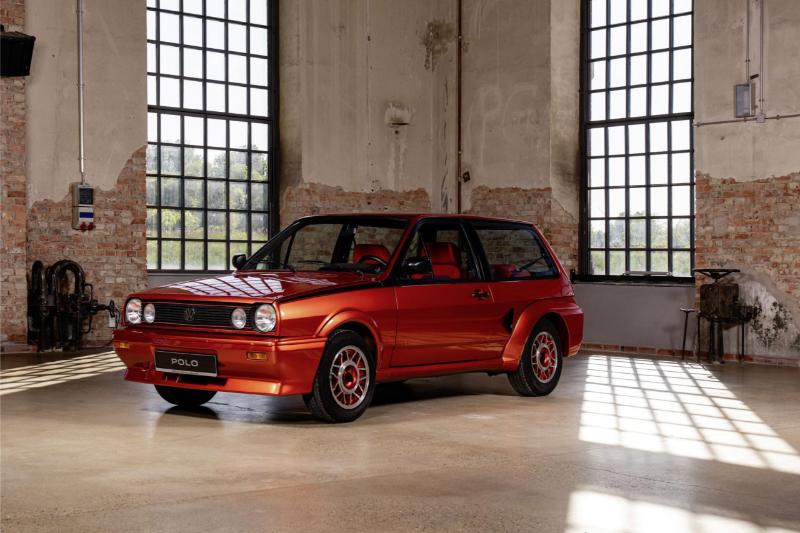
Visually the Polo Sprint was easy to distinguish from its mass-produced siblings. The body was widened significantly to cover the large racing tires and extended suspension components. Large air vents were integrated into the side panels to channel cool air directly to the engine compartment in the back. Although the car showed immense promise it remained a one-off study rather than a production reality. The high cost of manufacturing such a specialized vehicle likely prevented it from reaching dealerships.
Today the Polo Sprint serves as a fascinating example of what Volkswagen engineers could achieve when given creative freedom. It helped pave the way for future performance technologies including the supercharged engines used in the later Polo G40 models. The prototype remains a beloved piece of history for fans of German automotive engineering. It offers a glimpse into a timeline where Volkswagen challenged the most extreme hot hatches of the decade.
Tell us if you think this rear-wheel-drive prototype would have been a success in the comments.