Hyundai and BMW Offer 2025 EV Leases Under $200 Monthly
Hyundai and BMW have slashed lease rates on select 2025 electric vehicle models to below $200 per month, capitalizing on year-end inventory clearances before federal tax credit changes take effect. The deals target budget-conscious buyers amid a projected 8 percent dip in U.S. EV sales for the fourth quarter. Automakers aim to move remaining stock of outgoing models, offering terms that mirror pre-subsidy pricing.
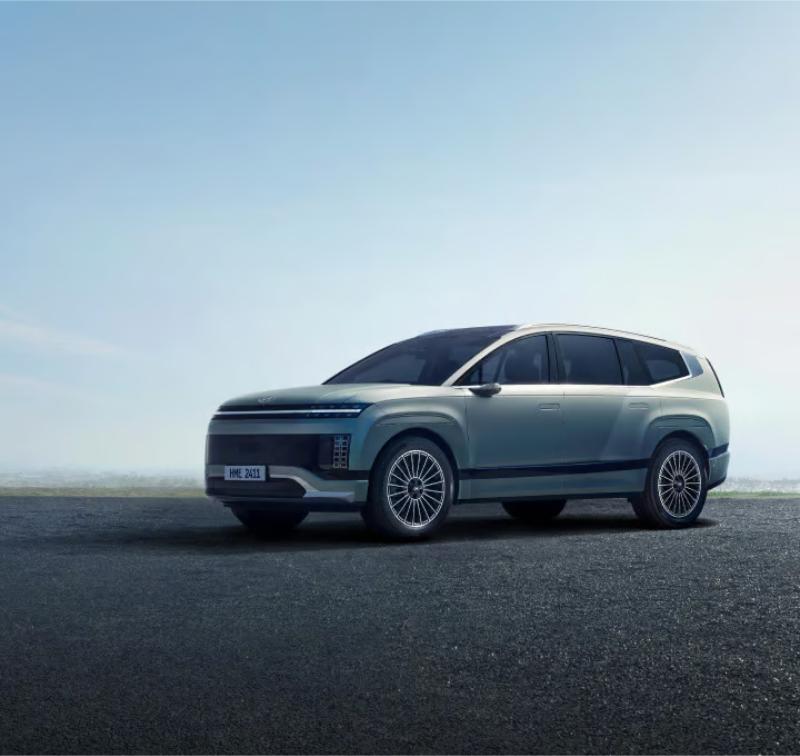
Hyundai’s Ioniq 5 Preferred trim leases for $189 monthly over 36 months with $3,999 due at signing, including 10,000 miles annually. The compact crossover features a 63-kilowatt-hour battery delivering 303 miles of EPA range and 225 horsepower from its single rear motor. Standard equipment includes adaptive cruise control, wireless charging, and vehicle-to-load capability up to 1.9 kilowatts.
BMW’s i4 eDrive40 leases at $199 monthly under identical terms, retaining the $7,500 federal incentive value through effective pricing. This rear-wheel-drive sedan packs a 81.5-kilowatt-hour battery for 301 miles of range and 335 horsepower, accelerating to 60 miles per hour in 5.5 seconds. The cabin boasts a 14.9-inch curved display with iDrive 8.5 software and optional Iconic Sounds for synthesized engine notes.
Both vehicles qualify for the full $7,500 point-of-sale rebate under current Inflation Reduction Act rules, reducing out-the-door costs. Hyundai reports 12,500 Ioniq 5 units in U.S. dealer stock as of early December, while BMW holds 4,200 i4s. Lease residuals sit at 55 percent for the Ioniq 5 and 53 percent for the i4, reflecting strong projected values despite market softening.
The promotions stem from excess production tied to earlier subsidy expectations, with Hyundai’s Georgia plant at 85 percent capacity utilization. BMW’s Spartanburg facility prioritizes gas models, limiting i4 output to 25,000 annually. Dealers in high-EV states like California and Florida lead uptake, with 60 percent of deals closed there.
Charging infrastructure expansions support the push, as Electrify America adds 500 stalls in December alone. The Ioniq 5 supports 350-kilowatt DC fast charging for 10 to 80 percent in 18 minutes, while the i4 reaches 195 kilowatts. Maintenance costs average $0.03 per mile for both, per AAA data, versus $0.10 for gas equivalents.
Competitors like the Tesla Model 3 and Chevrolet Equinox EV offer similar leases starting at $229, but Hyundai and BMW emphasize premium interiors. The Ioniq 5’s panoramic roof and 12-speaker audio system contrast the i4’s carbon-fiber accents and Harman Kardon setup. Safety ratings include five-star NHTSA scores for crash protection.
U.S. EV inventory rose 15 percent year-over-year to 85,000 units, per Cox Automotive, pressuring margins. These deals could clear 20,000 vehicles by January, analysts estimate. As 2026 models arrive with updated batteries, the promotions signal a transitional bargain window for early adopters.
Hyundai extends the offer through December 31 at participating dealers, requiring credit approval above 700 FICO. BMW matches until stock depletes, bundling free public charging credits worth $500. Both include three-year/36,000-mile warranties covering battery degradation below 70 percent capacity.
The strategy aligns with broader industry adjustments, as global EV production growth slows to 25 percent from 40 percent in 2024. Domestic content rules ensure eligibility, with 60 percent North American sourcing for batteries. Buyers transitioning from gas vehicles save $1,500 annually on fuel, per Energy Department calculations at $3.50 per gallon.
Lease volume for EVs hit 45,000 in November, up 12 percent monthly, buoyed by such incentives. The Ioniq 5’s 800-volt architecture enables bidirectional charging for home backups up to 3.6 kilowatts. The i4’s xDrive40 all-wheel variant adds $30 monthly but boosts traction in snow.
As tariffs loom on imported components, these U.S.-assembled models gain appeal. Hyundai projects 75,000 Ioniq 5 sales in 2025, while BMW eyes 40,000 i4s. The deals underscore affordability’s role in sustaining 8.5 million total U.S. EV registrations by year-end.