Hyundai Kia Capture Record US Market Share Despite Tariffs
Hyundai Motor Group surges past competitors to claim a record 10.9 percent share of the U.S. auto market in October, fueled by strong demand for electrified SUVs amid escalating trade barriers. The Korean brands delivered 128,000 vehicles, up 12 percent year-over-year, outpacing General Motors’ 16.5 percent share and Toyota’s 14.8 percent. This milestone arrives as 25 percent tariffs on imported vehicles take effect, yet Hyundai and Kia maintain 62 percent domestic production at plants in Alabama, Georgia, and Georgia.
Electrified models drive the gains, with hybrids and plug-in hybrids accounting for 38 percent of sales versus 22 percent industry-wide. The ‘Tucson Hybrid’ sold 12,500 units, a 28 percent increase, while the ‘Santa Fe Hybrid’ moved 9,800, up 35 percent, both leveraging a 1.6-liter turbo-four paired with a 44-kW electric motor for 231 horsepower and 38 mpg combined. Kia’s ‘Sorento PHEV’ captured 6,200 sales, its 1.6-liter setup yielding 261 horsepower and 32 miles of electric range. Pure EVs like the ‘Ioniq 5’ tallied 4,100 units despite the $7,500 federal tax credit’s expiration on September 30, holding steady against a 15 percent segment-wide drop.
Production localization shields the group from tariff hikes, with the Montgomery, Alabama facility outputting 400,000 units annually, including 80 percent of Hyundai’s U.S.-bound SUVs. The $7.6 billion Georgia Metaplant America in Savannah ramps to 300,000 vehicles yearly by mid-2026, focusing on EVs like the upcoming ‘Ioniq 9’ three-row SUV with 300-mile range from a 100-kWh battery. Kia expands in West Point, Georgia, adding 200,000 units of ‘Telluride’ and ‘EV9’ capacity, reducing import reliance to 38 percent from 52 percent in 2024.
U.S. consumers favor the group’s value proposition, where average transaction prices average $37,200—$4,800 below the industry $42,000—bolstered by 0.9 percent financing for 60 months on hybrids. J.D. Power’s 2025 Initial Quality Study ranks Hyundai second overall, citing superior infotainment responsiveness in 92 percent of ‘Ioniq’ owners. Cox Automotive projects the group’s 2025 volume at 1.6 million units, a 10 percent rise, capturing share from Stellantis’ 8.2 percent decline to 112,000 sales.
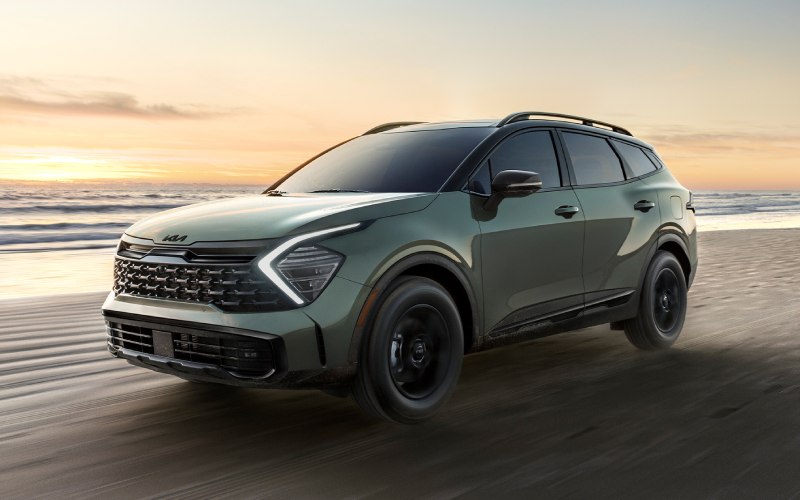
Tariffs, imposed under Section 301 reviews targeting non-North American assembly, add $2,500 to imported models’ costs, yet Hyundai absorbs 60 percent through efficiencies. The ‘Elantra Hybrid’ at $25,450 undercuts Honda’s ‘Civic Hybrid’ by $1,500, driving 18,000 sales, up 22 percent. Kia’s ‘Sportage Hybrid’ follows with 15,200 units, its 227-horsepower system and 42 mpg edging Subaru’s ‘Forester’ in fuel savings over five years.
Broader electrification pushes include bidirectional charging on 40 percent of 2026 models, enabling 3.6 kW home backup. Hyundai’s E-GMP platform underpins 70 percent of EVs, with 800-volt architecture supporting 350-kW fast charging to 80 percent in 18 minutes. Kia targets 20 percent EV sales by 2027, launching the ‘EV3’ compact at $35,000 with 300-mile range.
Analysts at S&P Global Mobility forecast Hyundai-Kia reaching 11.5 percent share in 2026, pressuring Ford’s 13.2 percent amid its 8 percent hybrid growth. Edmunds’ Ivan Drury noted, “Their pricing discipline and SUV dominance create a tariff-proof moat in America’s heartland markets.” As infrastructure hits 200,000 public chargers, the group’s 15 percent electrified penetration—versus 7.5 percent overall—positions it to gain 200,000 annual sales from legacy brands’ 5 percent EV slippage.
This ascent reflects adaptive strategies, with $12 billion invested in U.S. facilities since 2020, yielding 45,000 jobs and 1.2 million vehicles yearly. For buyers prioritizing 40 mpg efficiency under $40,000, Hyundai and Kia’s lineup—spanning ‘Venue’ subcompacts to ‘Telluride’ three-rowers—delivers without premium pricing, reshaping competitive dynamics in a tariff-laden landscape.