Hyundai Validates US Manufacturing Pivot with Ioniq 9 Production and CEO Promotion
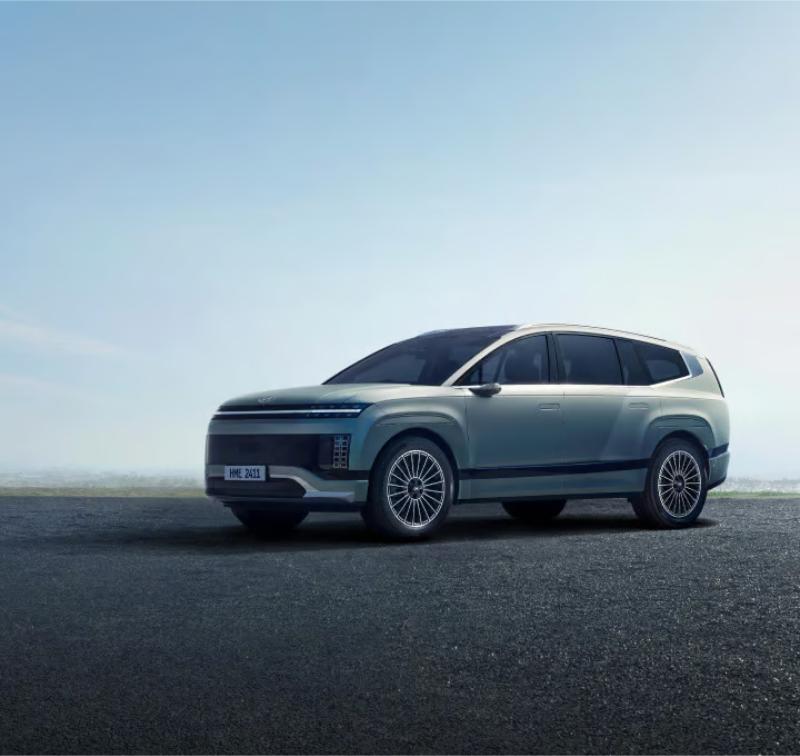
Hyundai Motor Group solidified its aggressive North American expansion strategy this weekend by confirming the production specifications for the 2026 Ioniq 9, alongside a historic leadership restructure that places North American operations at the center of the company’s global hierarchy. In a move that breaks decades of tradition, the South Korean automaker announced that José Muñoz, currently the head of North American operations, will ascend to the role of Global CEO starting January 1. This leadership change coincides directly with the official debut of the Ioniq 9, a three-row electric SUV designed specifically to capture the lucrative American family hauler segment currently dominated by internal combustion rivals.
The Ioniq 9 serves as the first true test for Hyundai’s massive $7.6 billion investment in the “Metaplant America” facility in Georgia, where the vehicle will be assembled. By localizing production, Hyundai ensures the flagship SUV qualifies for the critical $7.500 federal tax credit, a financial advantage that executives stated was a “non-negotiable” requirement for the vehicle’s volume targets. The confirmed technical data reveals that the Ioniq 9 will utilize a high-capacity 110.3-kWh NCM lithium-ion battery pack, targeting an EPA-estimated range of 335 miles for the Long Range RWD trim. This places it competitively against the Rivian R1S and its corporate cousin, the Kia EV9, while undercutting premium legacy options on price.
Technical briefings held shortly after the reveal highlighted the platform’s readiness for the next generation of charging infrastructure. The Ioniq 9 will launch with the North American Charging Standard (NACS) port natively integrated, granting owners immediate access to the Tesla Supercharger network without the need for adapters. Engineers emphasized that the vehicle’s 800-volt architecture allows for 350 kW DC fast charging, capable of replenishing the battery from 10% to 80% in just 24 minutes. This charging curve is maintained even with the larger battery pack, a feat achieved through improved thermal management systems designed to handle high-amperage sustained loads.
The design philosophy, described by Hyundai’s styling chief as “Aerosthetic,” achieves a drag coefficient of just 0.269, a remarkable figure for a vehicle of this physical footprint. The interior leverages the dedicated E-GMP electric platform to offer a completely flat floor, enabling features like swiveling second-row seats in select markets and a “Universal Island” sliding console that allows pass-through access between the front seats. Executives positioned the cabin as a “lounge on wheels,” targeting buyers who prioritize third-row habitability, a metric where the Ioniq 9 claims class-leading headroom and legroom figures compared to the Toyota Grand Highlander and Ford Explorer.
Market analysts view the simultaneous promotion of Muñoz and the launch of the Georgia-built Ioniq 9 as a definitive signal that Hyundai is decoupling its EV strategy from fluctuating export tariffs. By placing a Western executive at the helm and locking in US-based battery and vehicle assembly, the automaker is insulating its most important product launch from potential geopolitical trade friction. The 2026 Ioniq 9 is scheduled to arrive in dealerships in the first half of the coming year, with pricing expected to start in the mid-$50,000 range, aggressively positioning it to convert traditional hybrid buyers to full electrification.