Indian Automakers Ramp Up Exports to Europe Amid China Rivalry
Can India supplant China as Europe’s go-to source for affordable vehicles? Exports of Indian-made cars to the continent surged ninefold in early 2025, fueled by a $22 billion government incentive package and rising global demand for cost-competitive alternatives.
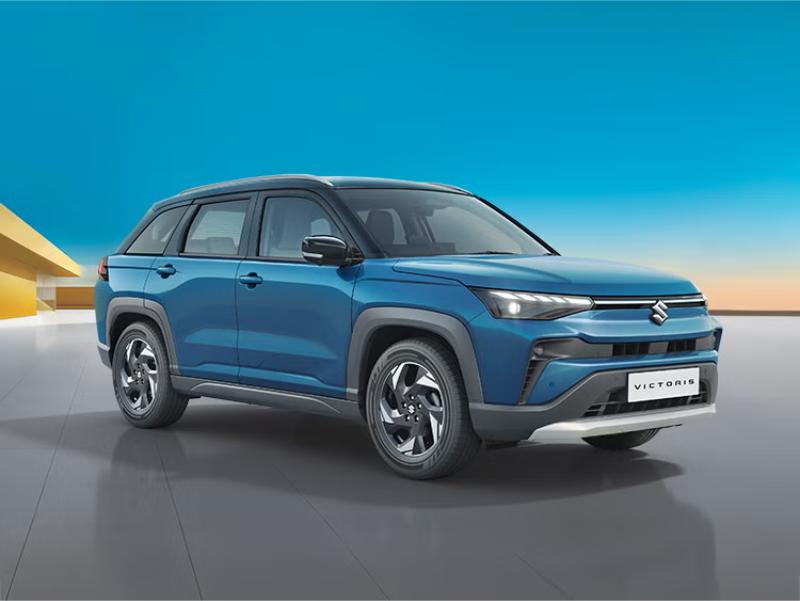
Maruti Suzuki India Limited exported over 7,400 units of its ‘eVitara’ electric SUV to European markets since production began in August 2025. The midsize model features a 49-kilowatt-hour battery pack delivering 173 horsepower and a 400-kilometer range under WLTP standards. Shipments targeted the United Kingdom, Germany, Spain, and Norway, where sales reached $63 million between April and August. This figure represents 2 percent of India’s total car exports but marks a sharp increase from the prior fiscal year.
Hyundai Motor India Limited followed with exports of its ‘Creta’ compact SUV, totaling 12,000 units to the same destinations by October 2025. The vehicle employs a 1.5-liter turbocharged petrol engine producing 158 horsepower and 253 Newton-meters of torque, paired with a seven-speed dual-clutch transmission. Honda Cars India dispatched 5,500 ‘Amaze’ subcompact sedans, equipped with a 1.2-liter naturally aspirated engine yielding 89 horsepower and 110 Newton-meters of torque. Volkswagen Group’s Indian operations shipped 8,200 ‘Virtus’ sedans, featuring a 1.0-liter turbocharged three-cylinder engine at 113 horsepower.
India’s overall vehicle exports hit 514,622 units from April to October 2025, comprising 67 percent of the previous fiscal year’s total. Maruti Suzuki led with 42 percent market share, followed by Hyundai at 24 percent. The Society of Indian Automobile Manufacturers reported a 14 percent year-over-year growth in passenger vehicle exports, driven by enhanced localization exceeding 90 percent for most models. Key destinations beyond Europe include Japan, where exports quadrupled to $813 million in the fiscal year ending March 2025.
Rahul Bharti, senior executive officer for corporate affairs at Maruti Suzuki, stated, “India gives a clear cost advantage for manufacturing.” This edge stems from labor costs 40 percent below China’s and the Production Linked Incentive scheme, which reimburses 4 to 6 percent of incremental sales. The program has attracted $5 billion in automotive investments since 2021, focusing on electric and hybrid technologies.
Japan’s Suzuki Motor Corporation designated India as a global hub for its next-generation electric vehicles, with production slated for 2026 at the Gujarat facility. Annual capacity will reach 250,000 units, supporting exports to Asia and Europe. Honda announced similar plans for hybrid models, leveraging its Greater Noida plant with 1.2 million unit output potential. These moves align with Europe’s 2035 ban on new internal-combustion engine sales, prompting a shift toward battery-electric platforms.
Export growth reflects broader industry trends, with India’s auto sector valued at $120 billion in 2025, contributing 7.5 percent to GDP. Safety upgrades, including six airbags and electronic stability control as standard in exported models, meet Euro NCAP four-star ratings. Fuel efficiency averages 20 kilometers per liter for petrol variants, undercutting Chinese equivalents by 15 percent.
Tata Motors expanded its Sanand plant in September 2025, adding 100,000 units for ‘Nexon’ EV exports to the UK under the India-UK free trade agreement. The pact reduces tariffs on fully built units from 100 percent to 10 percent over 10 years, starting with 10,000-unit quotas. Mahindra & Mahindra plans 20,000-unit shipments of the ‘XUV700’ SUV to Germany by mid-2026.
Challenges persist, including supply chain disruptions from Red Sea rerouting, which increased shipping costs by 20 percent. Indian exporters counter with 95 percent domestic sourcing for components like batteries and semiconductors. The Auto Component Manufacturers Association forecasts $25 billion in parts exports by 2027, bolstering vehicle competitiveness.
Global tariffs on Chinese EVs, reaching 45 percent in the EU, accelerate the pivot to India. Nissan Motor India exported 4,000 ‘Magnite’ crossovers to Spain, featuring a 1.0-liter turbo engine at 99 horsepower. Total European-bound shipments are projected to triple to 150,000 units in fiscal 2026.
India’s emergence as the fourth-largest global auto producer, with 5.3 million units exported in 2025, underscores its manufacturing evolution. Investments from Bosch and Motherson Group enhance quality, with defect rates below 50 parts per million. This positions Indian cars to capture 5 percent of Europe’s $500 billion market by 2030.