Mercedes Partners with Momenta to Deploy Level 4 Robotaxis in Abu Dhabi
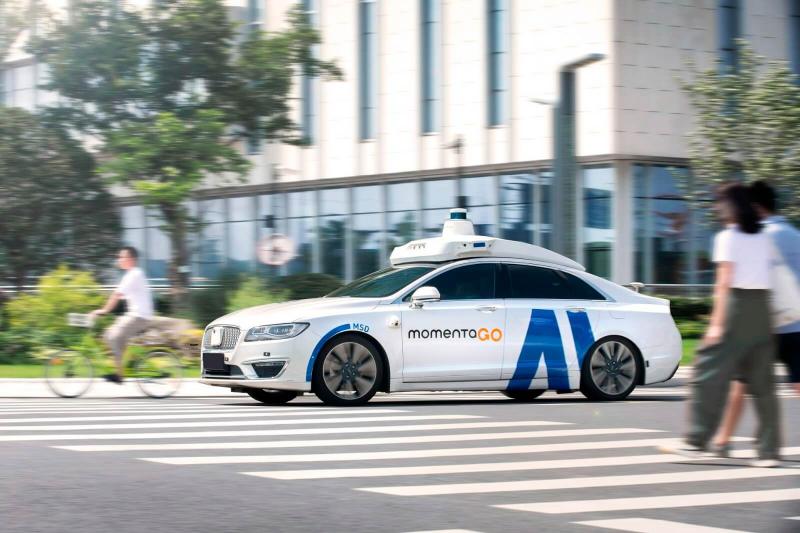
Mercedes-Benz Group AG enters the robotaxi market through a partnership with Chinese software developer Momenta Global Ltd. The collaboration targets deployment of self-driving vehicles in Abu Dhabi, supporting operations for Lumo Mobility. This marks Mercedes’ initial venture into autonomous ride-hailing services outside traditional passenger cars.
The agreement focuses on integrating Momenta’s autonomous driving software into Mercedes’ next-generation ‘S-Class’ model. This sedan, scheduled for debut in January, will enable Level 4 automated driving capabilities. Under this SAE-defined level, vehicles operate without human intervention in specific operational domains, such as designated urban routes in Abu Dhabi. Drivers may disengage completely from steering and monitoring within those geofenced areas.
Lumo Mobility, a subsidiary of UAE-based technology firm K2 Group, holds regulatory authorization to run autonomous vehicle services across the United Arab Emirates. The partnership leverages this approval to initiate robotaxi services starting in Abu Dhabi. Initial operations will prioritize high-density zones, including airport transfers and central business districts, with fleet sizes projected at 50 vehicles in the first phase. Expansion to other emirates follows pending further certifications.
Momenta’s technology stack includes end-to-end neural network models for perception, prediction, and planning. These systems process data from multiple sensors, including LiDAR, radar, and cameras, to achieve redundancy in adverse conditions like fog or heavy rain. The software has undergone over 10 million kilometers of real-world testing in China and Europe. Integration with Mercedes’ Drive Pilot hardware ensures compliance with Euro NCAP safety ratings.
Mercedes contributes its production-ready chassis and powertrain systems to the project. The ‘S-Class’ variant features a 48-volt mild-hybrid setup delivering 362 horsepower from a 3.0-liter inline-six engine. Battery capacity stands at 1.5 kWh for efficiency gains, with top speeds capped at 250 km/h for safety in autonomous mode. Vehicle-to-infrastructure communication protocols will connect to Abu Dhabi’s smart city grid for real-time traffic optimization.
Regulatory hurdles in the UAE facilitated the swift partnership formation. Abu Dhabi’s Integrated Transport Centre issued Level 4 permits in October, stipulating cybersecurity audits and emergency override mechanisms. Momenta’s Beijing-based team, comprising 800 engineers, relocated 50 specialists to Dubai for on-site calibration. Testing phases include 6,000 hours of simulated scenarios before public rollout.
The deal aligns with global shifts in autonomous mobility. Mercedes previously tested Level 3 systems in Germany, but Level 4 requires broader liability frameworks. Momenta, founded in 2016, raised $1.2 billion in funding from investors including Tencent and IDG Capital. Their platform supports over-the-air updates for continuous improvement in edge-case handling.
Industry analysts note the partnership’s strategic value amid intensifying competition. Waymo and Cruise dominate U.S. markets, while Baidu’s Apollo leads in Asia. For Mercedes, this expands revenue streams beyond vehicle sales, targeting 20% of mobility income from services by 2030. Lumo Mobility anticipates 100,000 rides monthly within two years, reducing urban congestion by 15% through optimized routing.
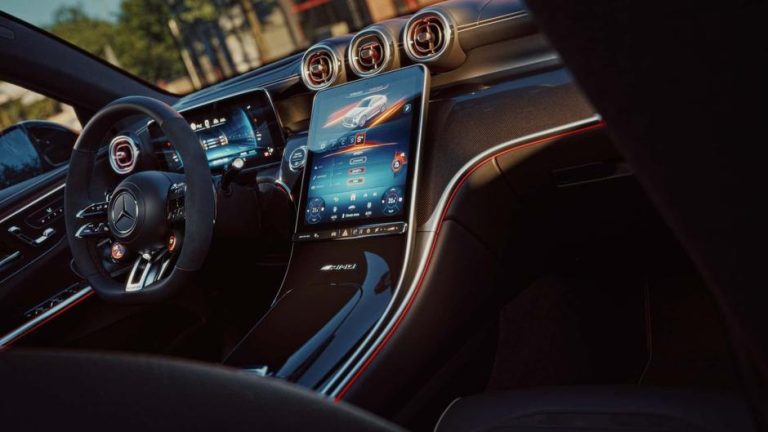
Technical specifications emphasize fault tolerance. The system employs triple-redundant computing units, each with 16-core processors and 64 GB RAM. Sensor fusion algorithms achieve 99.99% uptime, validated by ISO 26262 standards. Passenger interfaces include voice-activated controls and real-time journey analytics via a 12.8-inch OLED display.
This initiative positions Abu Dhabi as a Middle East hub for autonomous tech. Collaborators plan joint R&D centers to adapt software for regional driving norms, such as right-hand yields at roundabouts. Rollout timelines hinge on January’s vehicle launch, with pilot services commencing in Q2.