Porsche Unveils 1139-Horsepower Cayenne Turbo Electric at LA Auto Show
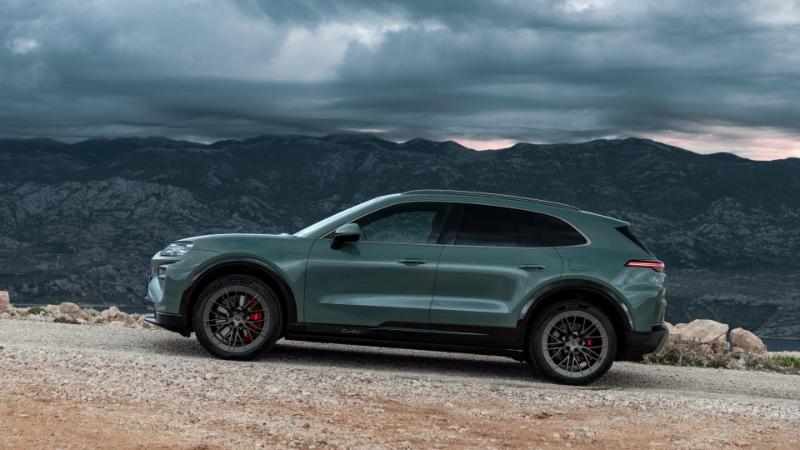
Porsche stunned the automotive world at the 2025 Los Angeles Auto Show this week by pulling the covers off its most powerful production vehicle to date. The German automaker introduced the all-new 2026 Porsche Cayenne Turbo Electric, a battery-powered SUV that delivers a staggering 1,139 horsepower. This reveal marks a pivotal moment for the brand as it electrifies its best-selling nameplate while continuing to offer internal combustion alternatives alongside it.
The headline statistics for the new flagship are nothing short of supercar territory. The Cayenne Turbo Electric utilizes a dual-motor setup to generate 1,139 horsepower and 1,106 pound-feet of torque. Porsche claims this allows the heavy SUV to sprint from zero to 60 mph in just 2.4 seconds, a figure that rivals the brand’s own 911 Turbo S. To achieve these numbers, engineers employed a new oil-cooled rear motor designed for sustained high-performance output.
Under the metal, the 2026 Cayenne Electric rides on the Premium Platform Electric (PPE) architecture, shared with the recently launched Macan Electric and Audi Q6 e-tron. The vehicle features a 108 kWh battery pack integrated directly into the chassis to improve structural rigidity and lower the center of gravity. Porsche utilizes an 800-volt electrical architecture, enabling DC fast charging speeds of up to 390 kW. Under ideal conditions, drivers can charge the battery from 10 percent to 80 percent in less than 16 minutes.
While the Turbo model grabs the headlines, Porsche also debuted a standard Cayenne Electric. This entry-level variant produces a robust 402 horsepower in normal driving, which temporarily boosts to 435 horsepower when using Launch Control. It sends power to all four wheels and targets a zero-to-60 mph time of 4.5 seconds. Both models feature Porsche’s new two-chamber, two-valve air suspension system as standard equipment, promising a wider breadth between comfort and handling performance.
A significant technological highlight is the optional Porsche Active Ride suspension system. This hydraulic system eliminates the need for traditional anti-roll bars by actively managing the forces at each wheel. During aggressive cornering, the system counteracts body roll to keep the cabin flat, while also dipping the nose or tail to compensate for acceleration and braking forces. This technology aims to mask the inevitable weight penalty associated with the large battery pack, ensuring the vehicle retains the driving dynamics characteristic of the badge.
The interior represents a significant departure from the outgoing internal combustion generation. The dashboard is dominated by the “Porsche Driver Experience” layout, featuring a curved 12.6-inch digital instrument cluster and a 12.3-inch central infotainment screen. For the first time in a Cayenne, buyers can opt for a 10.9-inch passenger display that allows the front passenger to stream video content invisible to the driver. The traditional analog tachometer is gone, replaced entirely by customizable digital readouts that prioritize range and charging data.
Porsche has adopted a unique strategy for this transition period by selling the new electric generation alongside the existing gas-powered Cayenne. The internal combustion model recently received a heavy facelift to extend its lifecycle into the 2030s. This approach allows the manufacturer to cater to markets where EV infrastructure remains immature while aggressively pursuing electric dominance in regions like California and Northern Europe. Executives at the show emphasized that the electric model is a completely standalone development, sharing no body panels with its gasoline counterpart.
Pricing reflects the significant jump in performance and technology. The 2026 Porsche Cayenne Electric will start at an MSRP of $111,350, while the range-topping Turbo Electric commands a starting price of $165,350. These figures place the Cayenne Electric squarely against competitors like the Lotus Eletre and the Mercedes-Maybach EQS SUV. Dealers are expected to begin deliveries late in the summer of 2026.