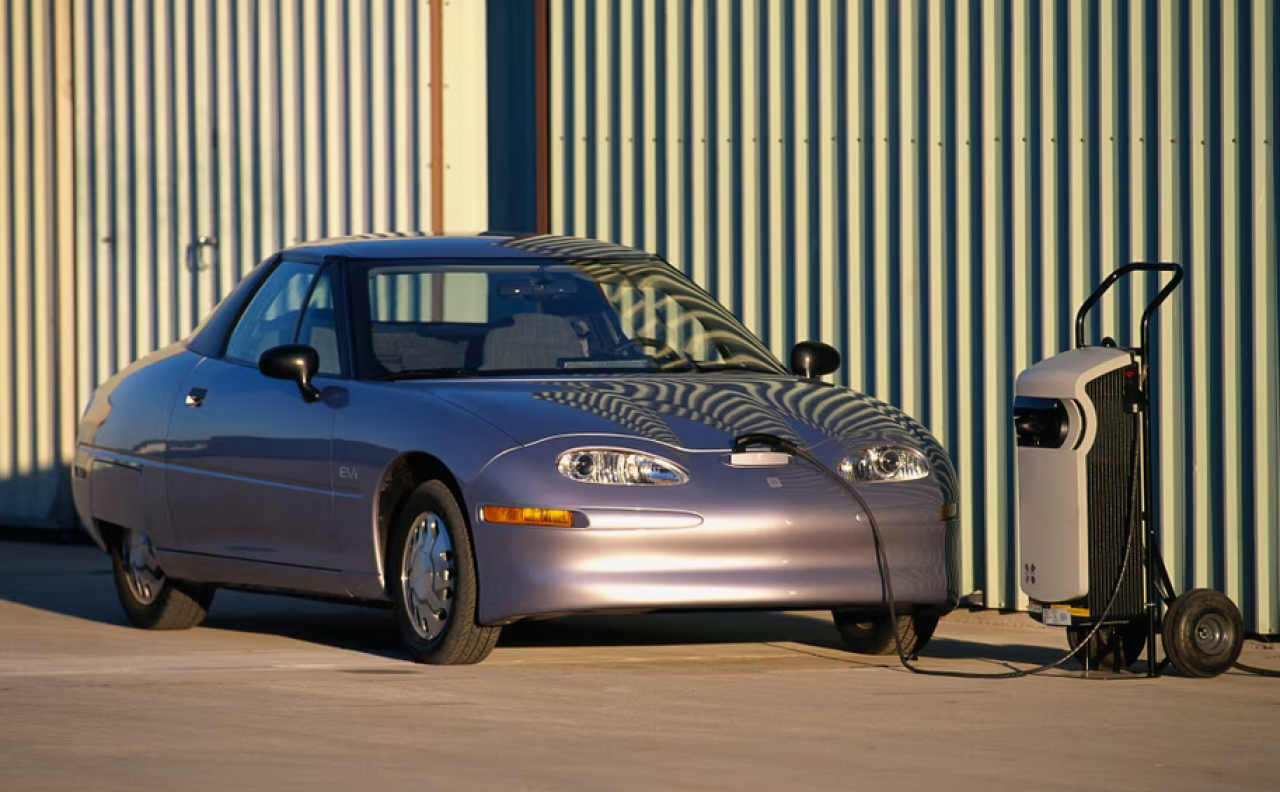
Remembering The First Attempt At A Mass Electric Vehicle That Appeared In 1996
The current automotive landscape is rapidly filling with battery-powered options from every major manufacturer. It is easy to forget that the electric revolution actually began in earnest nearly thirty years ago. General Motors released the futuristic EV1 back in 1996 to a shocked public. This launch happened significantly earlier than the arrival of the Nissan Leaf or the Tesla Model S.
This bold project started largely because of strict environmental regulations in California. The state government mandated that seven major automakers sell zero-emission vehicles to improve air quality. General Motors decided to design a vehicle from the ground up rather than retrofitting a gas car. The result was a sleek two-seater coupe that looked like a spaceship compared to sedans of the era.
Engineers focused heavily on aerodynamics to maximize the limited energy storage available at the time. The car featured a tear-drop shape and covered rear wheels to slice through the air with minimal resistance. The first generation used heavy lead-acid batteries that provided a range of approximately sixty to eighty miles. Later models received upgraded nickel-metal hydride batteries that allowed drivers to travel much further on a single charge.
Customers could not simply walk into a dealership and purchase the vehicle outright. General Motors only offered the EV1 through a restrictive leasing program at select Saturn dealerships. Monthly payments ranged from roughly four hundred to five hundred dollars depending on the location. Those who leased the cars fell in love with the silent operation and the instant torque of the electric motor.
The automotive industry simultaneously fought a legal battle to overturn the California sales mandate. Manufacturers argued that the technology was too expensive and that consumer demand was nonexistent. They eventually won a victory that allowed them to cease production of these compliance cars. General Motors immediately decided to cancel the EV1 program and recall every single unit on the road.
Lessees were devastated when they received notices that they had to return their beloved vehicles. Many drivers sent letters and even blank checks to the company hoping to buy their cars. A group of activists held protests and staged a mock funeral to draw attention to the situation. General Motors refused all offers and reclaimed the entire fleet for disposal.
Most of the reclaimed vehicles were transported to the Arizona desert and crushed into scrap metal. Only a handful escaped the crusher to be deactivated and displayed in museums or universities. This controversial destruction became the central topic of the documentary ‘Who Killed the Electric Car?’. The film explored the various industries that benefited from the failure of electric mobility.
Former CEO Rick Wagoner later admitted that terminating the program was the worst decision of his tenure. He realized too late that the company had a massive technological lead that they voluntarily threw away. The controversy ironically helped spark the modern electric vehicle industry that exists today. Elon Musk has explicitly stated that the destruction of the EV1 inspired him to create Tesla.
Please tell us what you think about the history of the General Motors EV1 and its untimely destruction in the comments.