Siberian Drivers Reveal The Unexpected Car Model Best For Minus 50 Weather
When winter temperatures plunge to minus 50 degrees Celsius, most vehicles would simply freeze solid, but life in Siberia requires drivers to adapt to these extreme conditions. Residents of the Yakutia region, home to the coldest inhabited places on Earth like Oymyakon and Verkhoyansk, cannot rely on standard automotive advice. While outsiders might expect these drivers to pilot massive specialized tanks or modern luxury SUVs, the reality on the ice roads is quite different. According to a report by Anna Sorokina, the local car culture is unique and dictated entirely by survival and reliability.
The most trusted vehicles in this frozen landscape are somewhat unexpectedly used Japanese imports with right-hand drive. The proximity of the Russian Far East to Japan has created a massive market for second-hand vehicles that arrive via the port of Vladivostok. Drivers in cities like Yakutsk and Norilsk favor these cars because they are affordable and boast legendary reliability even in deep freeze. Despite the steering wheel being on the “wrong” side for Russian traffic laws, these Japanese Domestic Market cars dominate the roads. Among them, the Toyota Land Cruiser stands out as the by far most represented model for its ability to handle the hostile terrain.
However, there is another vehicle that holds a legendary status among locals and is often considered the true king of the north. The UAZ-452, affectionately nicknamed the Bukhanka or “Loaf” due to its shape, is the pride of Russian engineering in these parts. Produced almost unchanged for over fifty years, this simple van is favored by emergency services, police, and delivery drivers. Its mechanical simplicity means it can be repaired with basic tools in the middle of a blizzard, a feat modern computerized cars cannot match. While it lacks comfort, the Bukhanka is trusted implicitly to start and run when everything else fails.
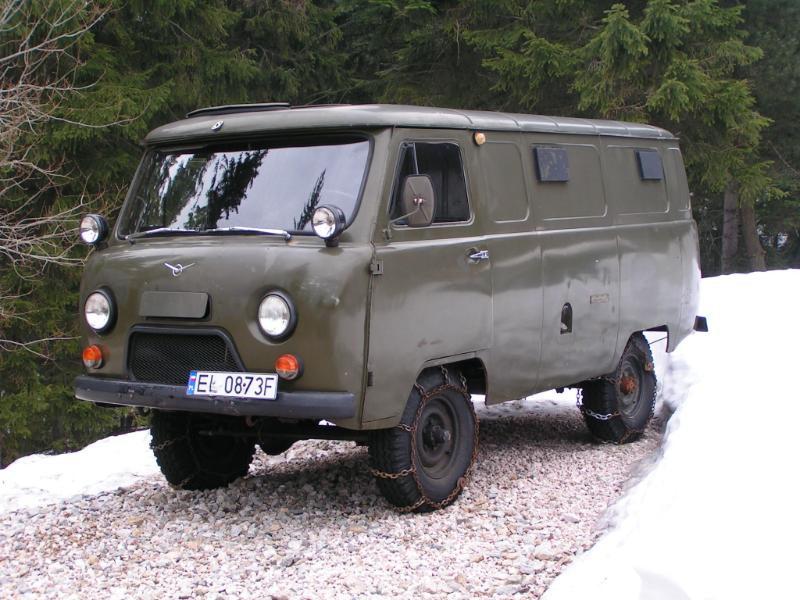
To keep these vehicles operational, drivers employ specific modifications such as installing double-paned windows to prevent frosting. Many owners also install Webasto heating systems to keep the engine and interior warm when parked. In the coldest months, it is not uncommon for drivers to leave their engines running 24 hours a day to prevent the fluids from freezing into a solid block. Petrol engines are overwhelmingly preferred over diesel, as diesel fuel tends to gel and clog fuel lines at such extreme temperatures.
The automotive landscape of Siberia proves that fancy features and modern aesthetics mean little when survival is at stake. Whether it is a rugged Toyota Land Cruiser or the utilitarian UAZ Bukhanka, the best car is simply the one that starts. These drivers have proven that sometimes the oldest and most unexpected choices are the only ones that make sense in the frozen wilderness.
Which vehicle would you trust to keep you safe in minus 50 degree weather, the Japanese import or the Soviet classic? Share your thoughts in the comments.