Trump Clears Path for Kei Cars in US Market
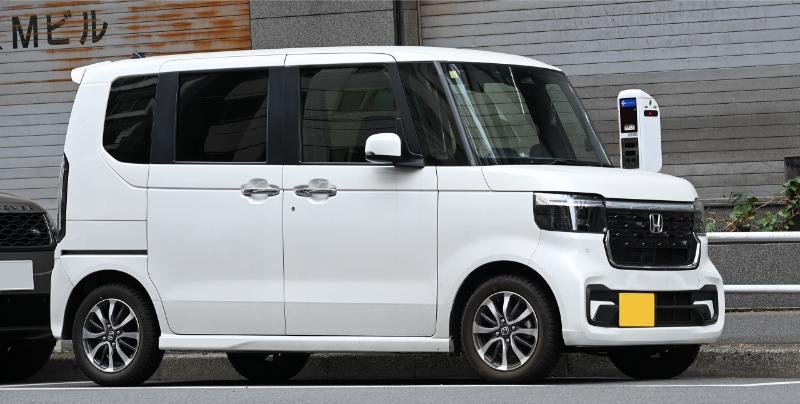
President Donald Trump has instructed Transportation Secretary Sean Duffy to authorize the production and sale of Kei cars in the United States, targeting compact models from Asian manufacturers. These vehicles, designed for narrow urban roads in Japan and similar markets, measure under 3.4 meters in length and 1.48 meters in width, with engine displacements capped at 660 cubic centimeters. The directive overrides longstanding federal safety and emissions barriers that previously excluded such pint-sized cars from American roads.
Kei cars comprise one-third of new vehicle sales in Japan, where they navigate congested cities with engines producing up to 64 horsepower and fuel efficiency exceeding 50 miles per gallon. Models like the Honda ‘N-ONE e’ and Nissan ‘Sakura’ incorporate electric powertrains, delivering 134 horsepower from lithium-ion batteries in a curb weight below 1,500 pounds. Trump highlighted their appeal during a meeting with industry leaders, stating they are “very small, they’re really cute.”
The policy integrates with the administration’s rollback of Biden-era Corporate Average Fuel Economy standards, which mandated 50.4 miles per gallon fleet averages by 2031. Existing rules impose crash-test requirements scaled for larger chassis, where Kei cars’ lightweight structures score poorly in offset frontal impacts against full-size pickups. Duffy’s department has cleared regulatory hurdles, allowing adaptations like reinforced side-impact beams and electronic stability control to achieve Federal Motor Vehicle Safety Standard compliance.
Automakers such as Toyota and Honda prepare to leverage the change, with Toyota’s ‘Pixel’ microcar platform adaptable for US assembly in Kentucky plants. Imports face no Section 232 tariffs under the 25-year vintage exemption, but new builds require underbody shielding for American potholes and adaptive cruise systems for highway merging. Production timelines project initial deliveries in Q3 2026, following 180-day rulemaking, with volumes starting at 50,000 units annually.
Safety data from Japan’s National Police Agency reports Kei cars’ fatality rate at 2.1 per billion miles traveled, versus 1.3 for standard vehicles, due to visibility limitations in mixed traffic. US National Highway Traffic Safety Administration simulations predict a 15 percent higher injury risk in collisions with SUVs averaging 5,000 pounds. Manufacturers counter with advanced materials like high-tensile steel, reducing intrusion by 20 percent in Euro NCAP equivalents.
Economic projections estimate Kei cars retailing from $15,000 to $20,000, undercutting subcompacts like the Chevrolet ‘Spark’ by 25 percent. This influx could capture 2 percent of US light-vehicle sales, or 400,000 units yearly, per Cox Automotive analysis, easing affordability pressures where average transaction prices reached $48,759 in November 2025. Urban millennials, facing parking constraints in cities like New York, represent prime demographics, with 60 percent expressing interest in vehicles under 150 inches long.
Environmental impacts diverge from electrification mandates, as non-electric Kei variants emit 90 grams of CO2 per kilometer under WLTP testing. Electric models align with grid decarbonization, offering 150-mile ranges on 20-kilowatt-hour packs. The Sierra Club warns of delayed emissions reductions, projecting 200 million additional tons of greenhouse gases by 2035 without stringent averages.
Trade balances shift minimally, with Japan exporting 80 percent of Kei production overseas already. Honda signals investment in Ohio facilities for hybrid Kei variants, sharing components with the ‘Fit’ lineage discontinued in 2020. Tariffs on Chinese equivalents persist at 27.5 percent, favoring allies under USMCA provisions.
Dealership networks adapt slowly, as 85 percent of US outlets prioritize SUVs yielding 12 percent margins versus 5 percent for compacts. Initial allocations route through specialty importers like Japanese Classics, expanding to mainstream lots by 2027. Consumer Protection Agency mandates clear labeling of speed limits, capped at 87 miles per hour for most models.
This authorization revives interest in micro-mobility, echoing the Smart ‘Fortwo”s 2008 US entry that sold 25,000 units before withdrawal. Insurers like Geico quote premiums 10 percent lower for Kei cars due to repair costs under $3,000 per incident. Fleet operators in delivery services eye conversions, with FedEx testing prototypes for last-mile efficiency.
Broader industry ripple effects include steel demand drops of 100 pounds per vehicle, benefiting aluminum suppliers. Toyota projects 10,000 US jobs from expanded lines, offsetting sedan declines since 2018. The move positions America closer to global norms, where compacts hold 35 percent market share in Europe.
Regulatory filings open public comment periods through February 2026, inviting input on pedestrian detection radars mandatory for approvals. Trump reiterated during the announcement, “We’re gonna approve those cars,” signaling firm commitment amid lobbying from the Alliance for Automotive Innovation.