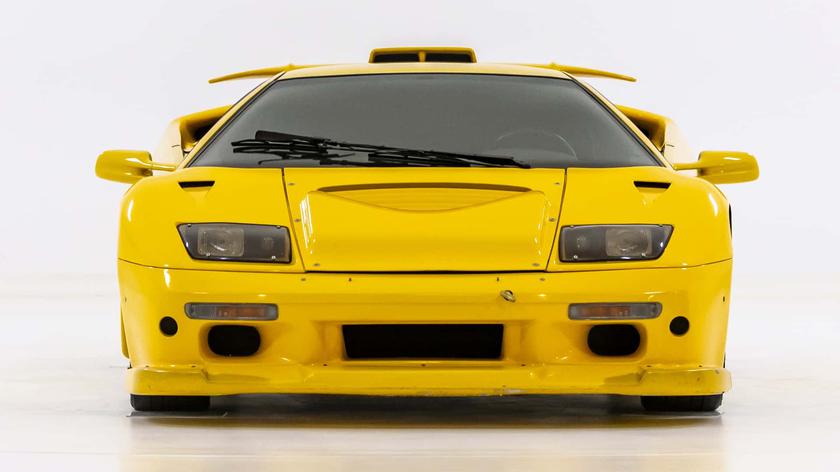
Volkswagen Secretly Developed A W16 Lamborghini Two Decades Ago And Here Is The Reason Why
The history of the automotive industry contains many secret projects that never saw the light of day until years later. One of the most fascinating stories involves a hidden experiment conducted by Volkswagen roughly twenty years ago. The project was driven by Ferdinand Karl Piëch who was the chairman of the Volkswagen Group at the time. He was a man known for his ambitious engineering goals and his desire to push technical boundaries beyond what others thought possible. His vision led to the creation of several unique vehicles that defied conventional market logic.
Volkswagen had acquired the Italian supercar manufacturer Lamborghini in 1998 which gave them access to high-performance platforms. Piëch wanted to test a massive new engine concept that was being developed for the revived Bugatti brand. The engineers needed a chassis capable of holding a large engine and the Lamborghini Diablo served as the perfect candidate. They selected a Diablo SV model from the late nineties to serve as a rolling laboratory for this experiment. This vehicle would undergo a radical transformation to accommodate a powertrain that was never intended for it.
The team removed the legendary Italian V12 engine that originally powered the Diablo. They replaced it with an experimental W16 engine that would later become the heart of the record-breaking Bugatti Veyron. This was not a simple task because the new sixteen-cylinder unit produced significantly more heat than the original engine. The engineers had to cut large vents into the rear bodywork to ensure the massive motor received adequate cooling. These modifications gave the car a raw and unfinished appearance that hinted at its experimental nature.
Visual changes were not limited to the engine bay as the front of the car was also altered. The iconic pop-up headlights of the standard Diablo were removed and replaced with fixed units. The car was never intended to be sold to the public or even shown at auto shows. Its sole purpose was to prove that the complex W16 engine architecture could function in a real-world driving environment. The data gathered from this mule was critical in convincing the executives to move forward with the W16 design instead of the W18 concept they had previously considered.
This unique prototype remained hidden from the public eye for many years. It currently resides in the Autostadt Museum where it stands as a testament to a fearless era of automotive engineering. The rough bodywork and improvised cooling solutions tell the story of a project focused purely on performance and technical validation. It represents a time when Volkswagen was willing to spend vast resources to achieve engineering supremacy. The lessons learned from this strange hybrid directly contributed to the success of the Bugatti Veyron.
The automotive world owes a debt to this secret test mule for proving the viability of the hypercar engine. It serves as a reminder that the most polished production cars often start as rough experiments behind closed doors. Enthusiasts can now look back at this project and appreciate the sheer audacity of putting a sixteen-cylinder engine into a Diablo. This heavily modified vehicle remains one of the most interesting footnotes in the history of both Volkswagen and Lamborghini.
If you could own any one-off prototype car from history which one would you choose so tell us your dream pick in the comments.