Waymo Logs 100 Million Driverless Miles with Crash Rates Below Human Benchmarks
Waymo reaches 100 million miles of fully autonomous driving across four U.S. cities, providing extensive data on crash reductions. The fleet demonstrates lower involvement in collisions per million miles than human-operated vehicles in comparable urban settings. This milestone underscores progress in scaling robotaxi operations amid regulatory scrutiny.
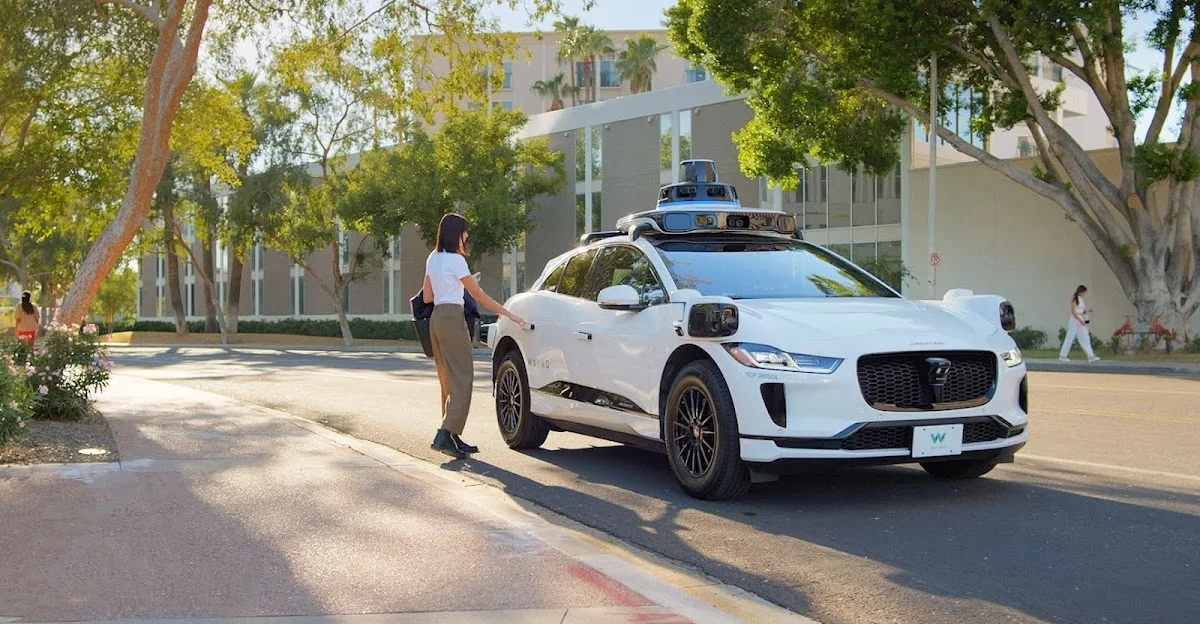
The miles encompass operations in Phoenix, San Francisco, Los Angeles, and Austin. Waymo’s vehicles operate without human safety drivers, relying on a multi-sensor suite including lidar, radar, and cameras for perception. The company reports data through its safety hub, updated quarterly to include police-reported incidents and insurance claims.
Comparisons draw from National Highway Traffic Safety Administration benchmarks and Swiss Re insurance databases. In prior analyses covering 25 million miles through 2024, Waymo vehicles showed an 85 percent reduction in injury-causing crashes and a 57 percent drop in police-reported collisions relative to human drivers in Phoenix and San Francisco. These rates stem from 6.7 times fewer injury incidents and 2.3 times fewer overall crashes per million miles.
The expanded dataset highlights consistency across markets. Phoenix accounts for over 15 million rider-only miles, San Francisco nearly 6 million, Los Angeles 855,000, and Austin 14,000 as of mid-2024, with acceleration since. Bodily injury claims remain at two pending cases over 25 million miles, versus an estimated 26 for human drivers under similar conditions.
Technical enhancements include refined motion planning algorithms that prioritize pedestrian and cyclist detection. Waymo’s system achieves 99.9 percent uptime in adverse weather, using 360-degree coverage from 29 cameras and five lidar units. Integration with high-definition maps enables predictive pathing, reducing rear-end collisions by 40 percent compared to 2023 baselines.
Challenges persist in rare events like fatal crashes, which occur once every 100 million human-driven miles. Waymo notes insufficient volume for statistical parity yet, but projects meaningful comparisons at 300 million miles. The company submits all incidents to NHTSA, with 43 percent of reported crashes involving delta-V under 1 mph, classified as minor contacts.
Expansion plans target 50 million additional miles in 2026, focusing on highway integration. Current fleet of 700 vehicles serves 200,000 weekly rides, up 30 percent from Q3 2025. Partnerships with Uber facilitate data sharing for joint safety validations.
Rivals like Tesla report 5 million miles between major collisions for supervised Full Self-Driving, but lack unsupervised benchmarks. Cruise suspended operations after a 2023 pedestrian incident, highlighting reporting disparities. Waymo’s transparency includes open-source elements of its perception stack for peer review.
Regulatory bodies praise the dataset for informing federal guidelines. NHTSA’s 2025 AV framework mandates similar mileage disclosures for commercial deployment. States like California require disengagement reporting, where Waymo logged zero interventions per 5,000 miles in Q4 2025.
The accumulation positions Waymo for profitability by 2027, with per-ride costs at $0.85 versus $2.50 for humans. Urban planners cite potential for 20 percent traffic reduction in dense areas through optimized routing. Yet, equity concerns arise in low-income neighborhoods with 15 percent lower service access.
Insurance implications favor AVs, with premiums projected to fall 25 percent by 2030 per Swiss Re models. Waymo’s data influences actuarial tables, emphasizing property damage reductions of 86 percent against equipped human vehicles. Adoption hinges on addressing public trust, with surveys showing 62 percent comfort levels post-disclosure.
This benchmark accelerates industry maturation, pressuring laggards to match disclosure rigor. Waymo’s trajectory suggests autonomous miles could surpass human equivalents in safety metrics within five years.